





Anthropic Interview Questions in 2026: 6 Examples

Anthropic software engineering interviews cover coding, a project deep dive, cultural fit, and mission alignment. Depending on the role, the loop may also cover infrastructure, distributed-system design, and safety judgment. Expect to explain why you want to work at Anthropic.
What to Expect: Anthropic Interview Process
The exact process differs depending on the team and level. Common touchpoints include phone interviews with the recruiter and hiring manager, a coding or design screen, onsite technical interviews, a project or deep dive interview, and a culture interview.
Expect to discuss specific implementation and architecture decisions. Infrastructure teams may ask about batching, model distribution, storage, caching, or concurrency. In the culture interview, use concrete examples to explain your values and your understanding of Anthropic's safety mission.
Your answers should separate what you decided on your own from what the team collectively decided.
How to Prepare and Pass Anthropic Interviews
Allow six to ten weeks. Divide your time among practical coding, distributed systems, the ML infrastructure concepts relevant to your role, and one project you can explain in staff-level detail. Practice breaking down ambiguous requirements and writing and testing correct code under time pressure.
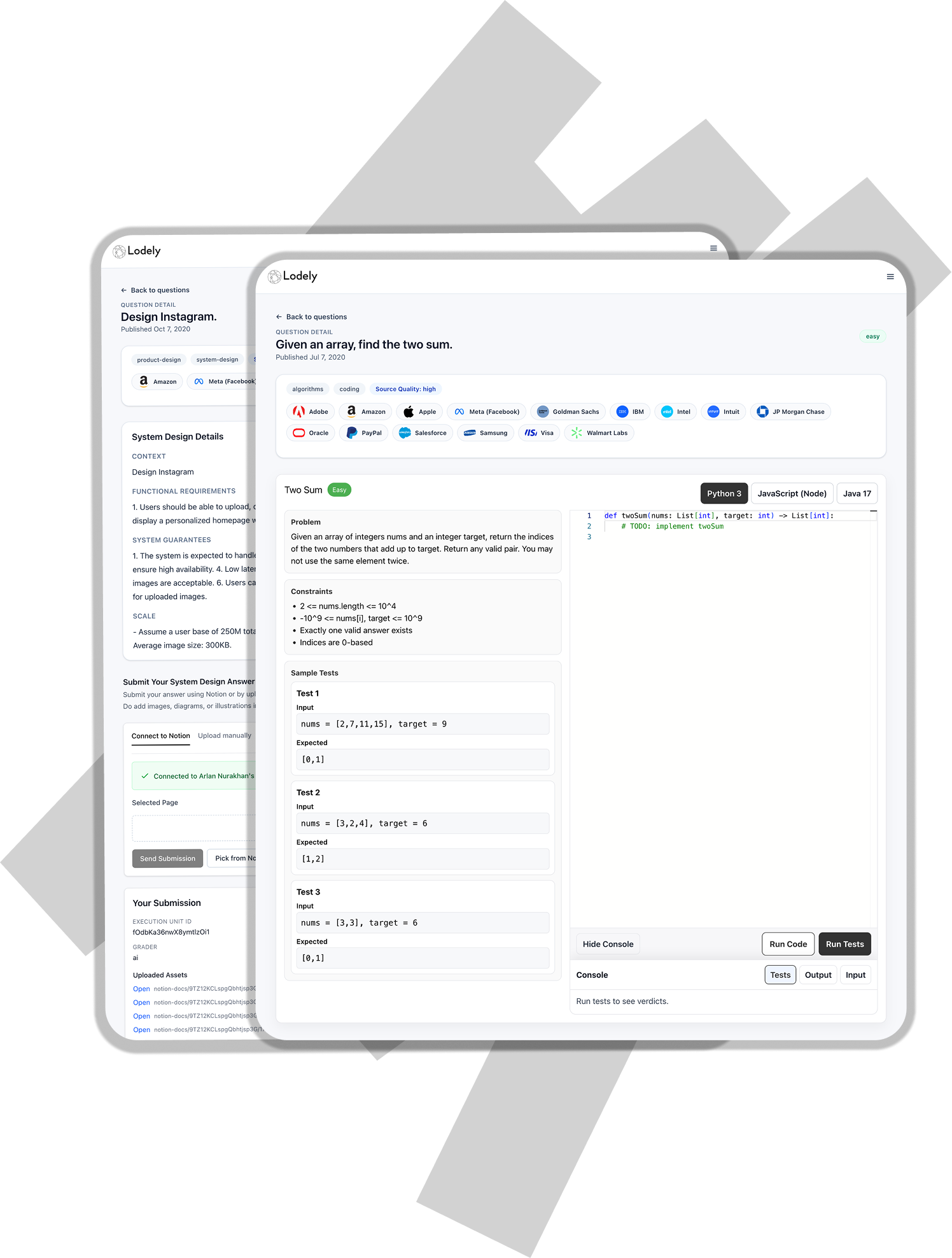
Prepare five stories about safety judgment, conflict, feedback, prioritization, and a decision you changed. Lodely provides company-specific questions that cover Anthropic's mix of technical and behavioral interviews.

Anthropic Interview Breakdown
Design a Key-Value Store
Type: Distributed-system design. What It Tests: Partitioning, replication, consistency, and failure recovery. The Trick: Choose the consistency contract before designing the architecture because it determines the replication and availability tradeoffs.
How Do You Prioritize Tasks?
Type: Behavioral judgment. What It Tests: Impact, risk, and communication. The Trick: Use a concrete example to show how you weigh urgency, leverage, dependencies, and safety.
Design a Web Crawler
Type: Large-scale system design. What It Tests: Frontier management, deduplication, crawl politeness, retries, and storage. The Trick: Control duplicates and per-domain limits while keeping workers busy.
Three more examples round out the set. Find Duplicate Files in a File System tests I/O-aware hashing and duplicate detection. Design a File Cache System tests cache invalidation and eviction. Why Anthropic? tests whether your experience and values align with a specific team and Anthropic's mission.
What Comes After The Interview
Panel calibration separates technical performance, project scope, and culture signals. If you receive an offer, confirm the level and review the equity component carefully. Equity makes up a large share of reported packages. Ask about grant size, vesting, and refreshes before comparing offers.
Candidate Experiences
One recent senior software candidate described a recruiter call, a coding phone screen, and a technical round with the hiring manager before the onsite. The onsite included design interviews, a project deep dive, and a culture conversation. The candidate emphasized the need for a clear, well-scoped project story. Prepare that story with the same care you give your code.
Conclusion
Anthropic rewards practical execution, deep systems thinking, clear evidence of your contributions, and sound judgment about its mission. Use Lodely to practice these examples as part of a complete interview loop.
✉️ Get free faang interview cheat sheet and interview tips weekly
✉️ Get free faang interview cheat sheet and interview tips weekly