


Arm Interview Questions in 2026: 8 Examples

Arm tailors engineering interviews to the role. Software candidates may be tested on C, C++, operating systems, algorithms, and computer architecture. Hardware and verification candidates may be tested on timing, pipelines, clocks, testability, and verification planning.
What to Expect: Arm Interview Process
Arm's official hiring process starts with a digital HireVue-style interview or a telephone interview with an Arm representative about motivation and technical fit. Some roles include a brief technical assessment. Later stages may involve talent acquisition, the hiring manager, and future team members. Candidates have reported one or more technical interviews lasting one to two hours each.
Use the job description to set your study priorities. For a compiler role, prepare for parsing, optimization, C++, and instruction-set behavior. For a CPU verification role, prepare for coverage, setup and hold timing, clocks, design for testability, and debugging.
How to Prepare and Pass Arm Interviews
Allow six to eight weeks. Review C, C++, pointers, memory, operating systems, bit manipulation, data structures, and the architecture topics named in the role. For hardware-facing roles, add timing analysis, clock-domain crossing, verification planning, and production testing.
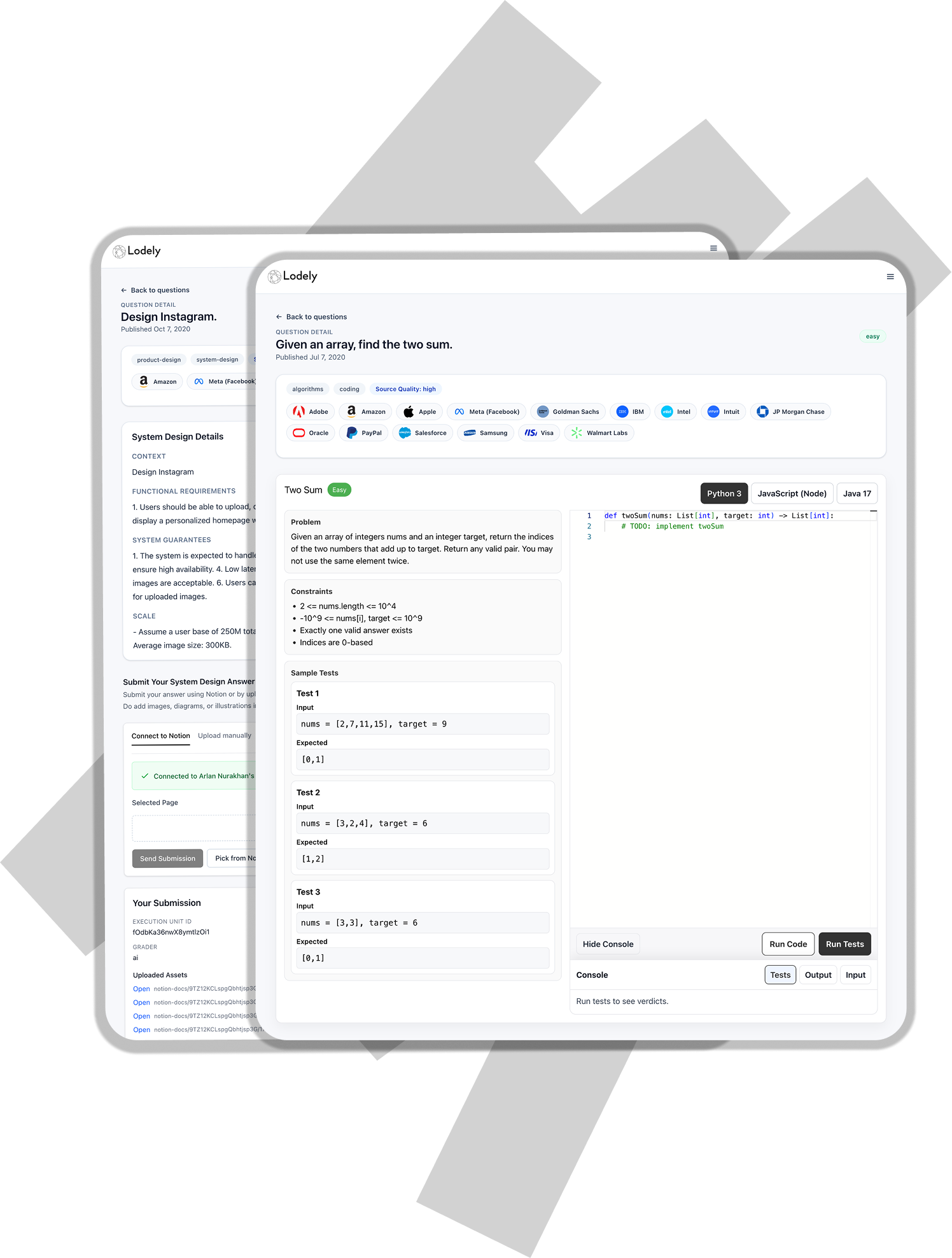
Prepare two project deep dives that explain your design, the hardest bug, and how you tested the result. Lodely provides Arm-specific technical and behavioral questions so you can practice both your reasoning and your explanation.
During each project discussion, separate your own decisions from the team's work and explain the evidence you used to diagnose the hardest bug. Then describe the test that confirmed the fix.
Arm Interview Breakdown
CPU Architecture Verification Plan
Type: Verification design. What It Tests: Coverage strategy, checkers, corner cases, and closure. The Trick: Tie each architectural requirement to stimulus, observability, expected behavior, and a concrete coverage goal.
Metastability in Flip-Flops
Type: Digital-design fundamentals. What It Tests: Clock-domain knowledge and risk assessment. The Trick: You can't eliminate metastability. Explain how synchronizers reduce the probability that it propagates and when a two-flip-flop synchronizer isn't enough.
Fix Setup and Hold Violations
Type: Timing analysis. What It Tests: Root-cause analysis and tradeoffs. The Trick: Setup and hold fixes affect timing in opposite directions. After every change, verify the other constraint.
Additional questions cover hold time, clock skew, scan fundamentals, iterative quicksort, and a major setback that required root-cause analysis and collaboration.
What Comes After The Interview
Arm may use separate specialist ladders. Ask how the grade maps to scope, location, bonus, and equity. Compensation varies widely by country, so evaluate the full offer against local benchmarks.
Candidate Experiences
One recent candidate for a campus software role described an online test followed by a live interview with four or five questions on data structures, two-pointer techniques, and bit manipulation. The interview also covered computer architecture, object-oriented programming, and operating systems. Fourteen of 132 candidates reached the final round. The account suggests that software candidates need broad coverage and detailed knowledge.
Conclusion
Arm evaluates your command of fundamentals, evidence-based debugging, and understanding of the hardware-software interface. Use Lodely to practice these examples before your technical interviews.
✉️ Get free faang interview cheat sheet and interview tips weekly
✉️ Get free faang interview cheat sheet and interview tips weekly