


GitHub Interview Questions: 2 Questions to Prepare for in 2026

GitHub software-engineering interviews combine hands-on technical work with conversations about teamwork, decision-making, and difficult situations. One Software Engineer II process included a recruiter conversation, two technical interviews, and a culture interview. The loop varies by team, so use your recruiter's packet as the final source for the format.
What to Expect: GitHub Interview Process
The recruiter interview usually covers your background and fit for the role. The process has no single standard format and may include hands-on application work. Recent applicants have reported small application tasks and HTTP/API work, followed by conversations about culture, teamwork, and decision-making.
Be prepared to explain requirements and review your own code. A correct answer may still be incomplete if you omit testing, error handling, or the reasoning behind the interface. For the culture round, prepare stories detailed enough to distinguish your decisions from your team's work. Make the outcome specific and verifiable.
How to Prepare and Pass GitHub Interviews
If your implementation skills are current, give yourself at least four to six weeks. During the first half, build small, realistic projects: parse input, call or design an API, test edge cases, and explain what you would change with more time. During the second half, rehearse concise stories about conflict, feedback, and ambiguous projects.
Complete at least two sessions in a shared editor. Start by confirming inputs and failure behavior. Then, while acting as the interviewer, give your partner time to run tests and read the results. For an HTTP exercise, discuss timeouts, retries, response validation, and how you would keep the client easy to change. This sequence makes your engineering judgment clear.
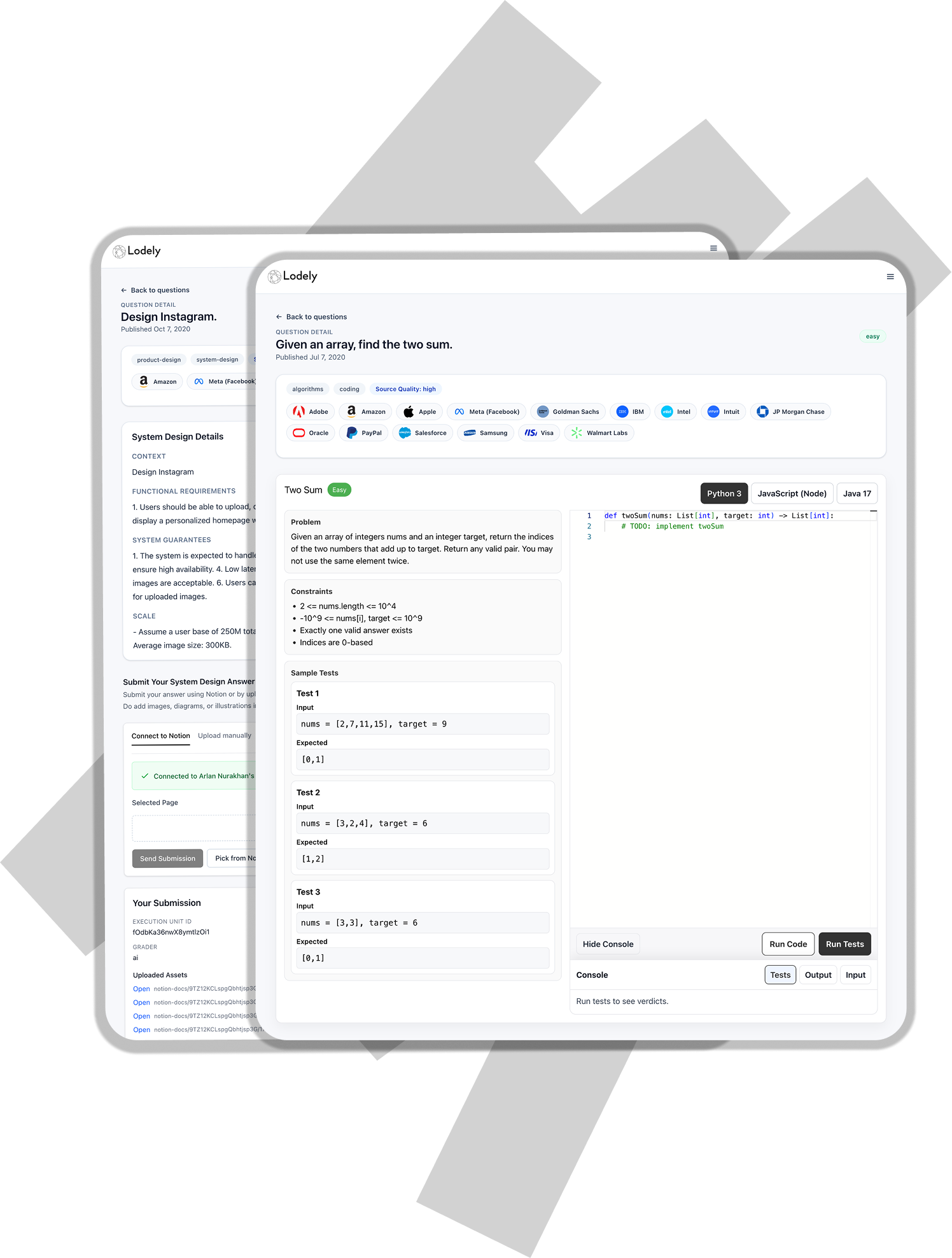
Focus each story on the context, your decision, and the result. Use Lodely for company-specific practice with detailed editorials and daily questions.

GitHub Interview Breakdown
Tell me about a time when you solved a complex problem and how you went about it.
Type: Behavioral problem-solving. The Trick: Choose a problem with some ambiguity and explain which alternative solutions you rejected. What It Tests: Ownership, judgment, and clear explanation.
Tell me about a time when you had to deliver negative feedback.
Type: Behavioral collaboration. The Trick: Show that you communicated directly without making the story about someone else's shortcomings. What It Tests: Directness, empathy, and whether your feedback led to a change.
What Comes After The Interview
The panel reviews the technical and culture signals before the recruiter communicates the decision. If you receive an offer, compare the entire package. As of August 2026, the reported median U.S. total compensation for an E4 is $283K. Base pay remains the largest component, and equity vests over four years.
Candidate Experiences
One recent Software Engineer II candidate described moving from a recruiter conversation directly to an interview day. That day included two technical sessions—one involving a small game and another involving HTTP calls—plus a separate culture interview. The candidate accepted the offer and described the process as straightforward. Prepare for practical building tasks and a focused discussion about collaboration.
Conclusion
GitHub values real-world results, tradeoffs, and authentic stories of collaboration. Use Lodely to practice GitHub questions and understand the reasoning behind each answer before your interview.
✉️ Get free faang interview cheat sheet and interview tips weekly
✉️ Get free faang interview cheat sheet and interview tips weekly