


Palo Alto Networks Interview Questions: 6 from Real Interviews

Palo Alto Networks software-engineering interviews combine coding, system design, project discussions, and behavioral questions. Some recent early-career and master's candidates reported three or four back-to-back technical interviews, each of which could include behavioral questions.
The six questions on this page focus on the behavioral portion of the interview. Also prepare for coding, modular design, networking fundamentals, and high-level system design for your role.
What to Expect: Palo Alto Networks Interview Process
According to the company's candidate FAQ, job seekers should tailor their preparation to the role because requirements vary. Recent software engineering reports describe an assessment or recruiter screen followed by three technical interviews; other candidates were briefed for four. Coding, design, project depth, and behavioral questions can all appear in the same session.
Ask how many interview rounds there are and which areas each one covers. For a security or networking role, focus on protocol development, concurrency, operating systems, authentication, security boundaries, and failure isolation. For a product-infrastructure role, also prepare for distributed storage, APIs, observability, and reliability.
How to Prepare and Pass Palo Alto Networks Interviews
If your coding and systems knowledge is current, allow four to six weeks. If you need to rebuild your networking and design knowledge, allow eight to twelve weeks. Recent loops have often required candidates to move directly from a coding problem to a design discussion and then two behavioral questions.
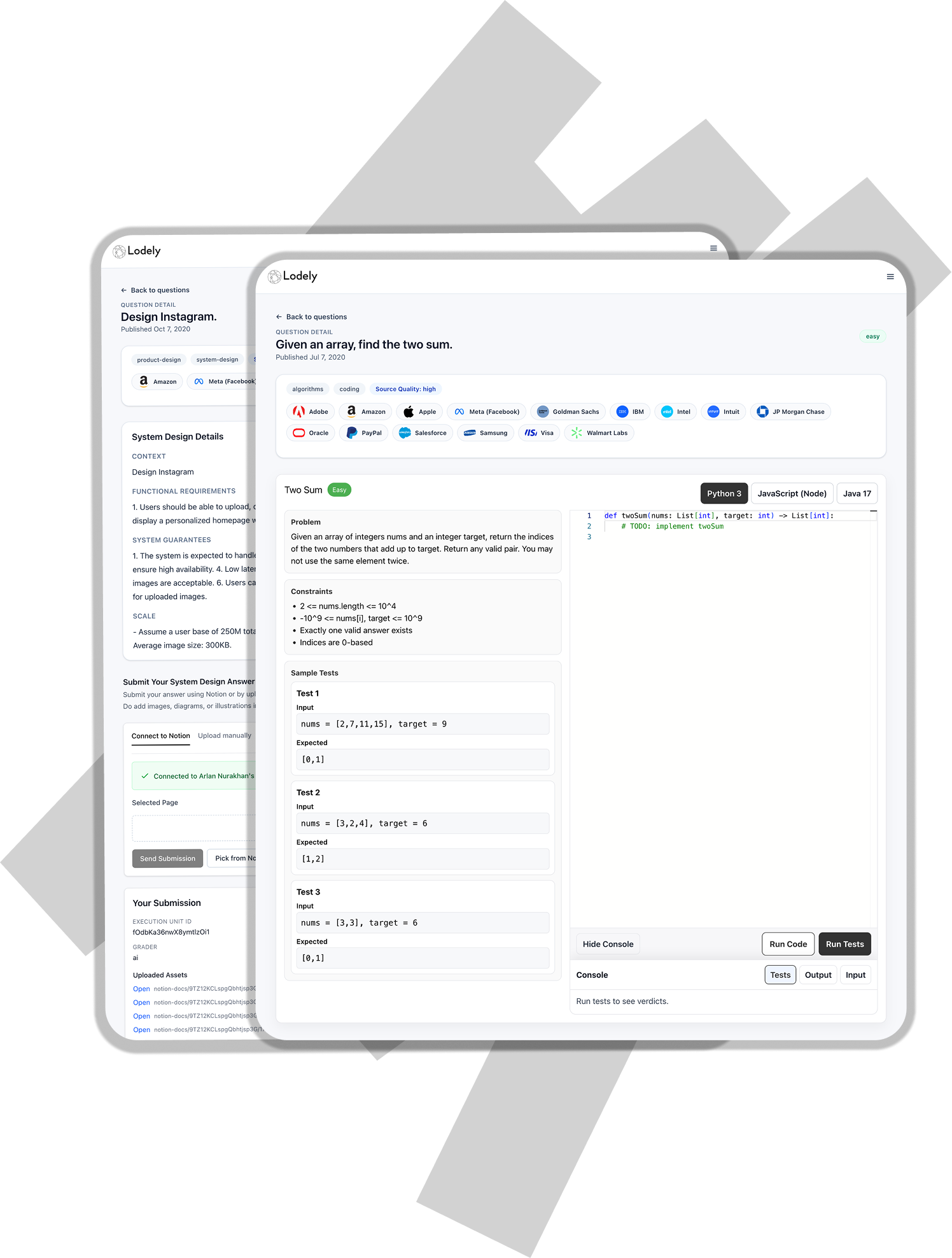
Write six STAR stories with measurable results: one bad decision, one proud moment, one project you owned, one original idea, one innovation you shipped, and one time you led others. Use Lodely to pair those stories with Palo Alto Networks coding and system-design practice.

Palo Alto Networks Interview Breakdown
Describe a Time You Made a Bad Decision
Type: Behavioral judgment and learning.
The Trick: Choose a real decision that had consequences. Explain what you missed, how you corrected it, and what process you changed afterward.
What It Tests: Responsibility, self-awareness, recovery, and whether you changed your behavior after learning from the mistake.
Tell Us About the Achievement You’re Most Proud Of
Type: Behavioral impact.
The Trick: Separate your contribution from the team's work and quantify the result. Show that your pride comes from the work and its impact.
What It Tests: Ownership, standards, communication, and motivation.
Which Project Are You Most Proud Of?
Type: Technical project deep dive.
The Trick: Explain the requirements, architecture, tradeoffs, failure modes, and results in a clear sequence.
What It Tests: Technical depth, decision-making, and your understanding of how your code affects the business or end user.
The remaining three prompts ask for your most creative idea, an innovative idea you implemented, and a story about leading a team. Use a different example for each. The first should show discovery, the second delivery, and the third how you helped other people make progress.
What You’re Playing For: Palo Alto Networks Compensation
September 2026 U.S. median compensation data reports $166,000 for software engineers, $208,000 for staff engineers, $279,000 for senior staff engineers, and $369,000 for principal engineers. Equity and bonuses can materially affect the total, so compare level mappings, annualized equity, vesting, and refresh grants.
What Comes After The Interview
Ask when the panel expects to finish its debrief and whether another approval step follows. If you receive an offer, compare the internal level, scope, team, base salary, bonus target, equity schedule, and sign-on terms before comparing job titles across companies.
Candidate Experiences
One recent master's-level candidate described three back-to-back one-hour virtual interviews. The sessions covered code modularity, a simple system-design exercise, and a coding problem, with behavioral questions included in every round. The candidate completed the requested work with roughly 30 minutes left in each session. Rehearse the technical answer and the behavioral follow-up as one continuous interview.
Conclusion
Palo Alto Networks values technical versatility and specific stories. Use Lodely to combine these six behavioral prompts with coding and design practice for the full interview loop.
✉️ Get free faang interview cheat sheet and interview tips weekly
✉️ Get free faang interview cheat sheet and interview tips weekly