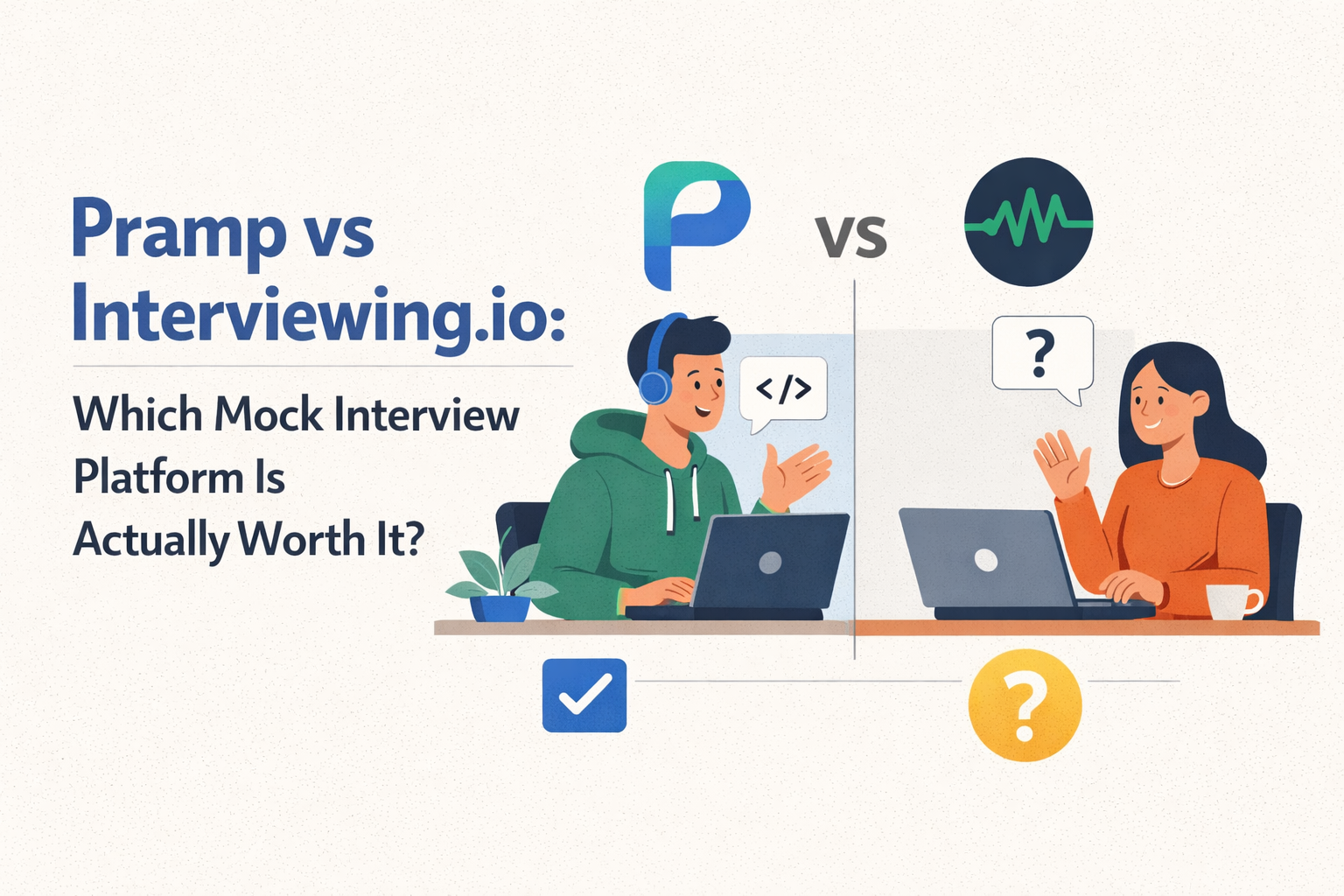
Pramp vs Interviewing.io: Which Mock Interview Platform Is Actually Worth It?

You've grinded through hundreds of LeetCode problems, your system design notes are color-coded, and your STAR stories are polished. But there's one thing solo prep can't simulate: sitting across from a real person who's about to judge your thought process in real time.
That's where mock interview platforms come in. Pramp and Interviewing.io are the two names that come up in every Reddit thread and Discord channel about interview practice. But they're very different products solving very different problems, and picking the wrong one can waste weeks of prep time you don't have.
Here's the honest breakdown so you can stop reading comparison threads and start actually practicing.
What You're Actually Signing Up For
Pramp

Pramp is a free, peer-to-peer mock interview platform. You sign up, pick a time slot, and get matched with another engineer who's also prepping. You interview each other, taking turns as interviewer and candidate, then exchange feedback afterward.
The question bank covers coding, system design, behavioral, and data science. You don't choose your question — the platform assigns one to your partner, and vice versa. Sessions run about 30-45 minutes each way, and you can book as many as your schedule allows.
The key word here is peer. Your interviewer might be a senior engineer at Google, or they might be someone three weeks into their first Python course. You don't get to pick, and there's no quality filter on who shows up.
Interviewing.io
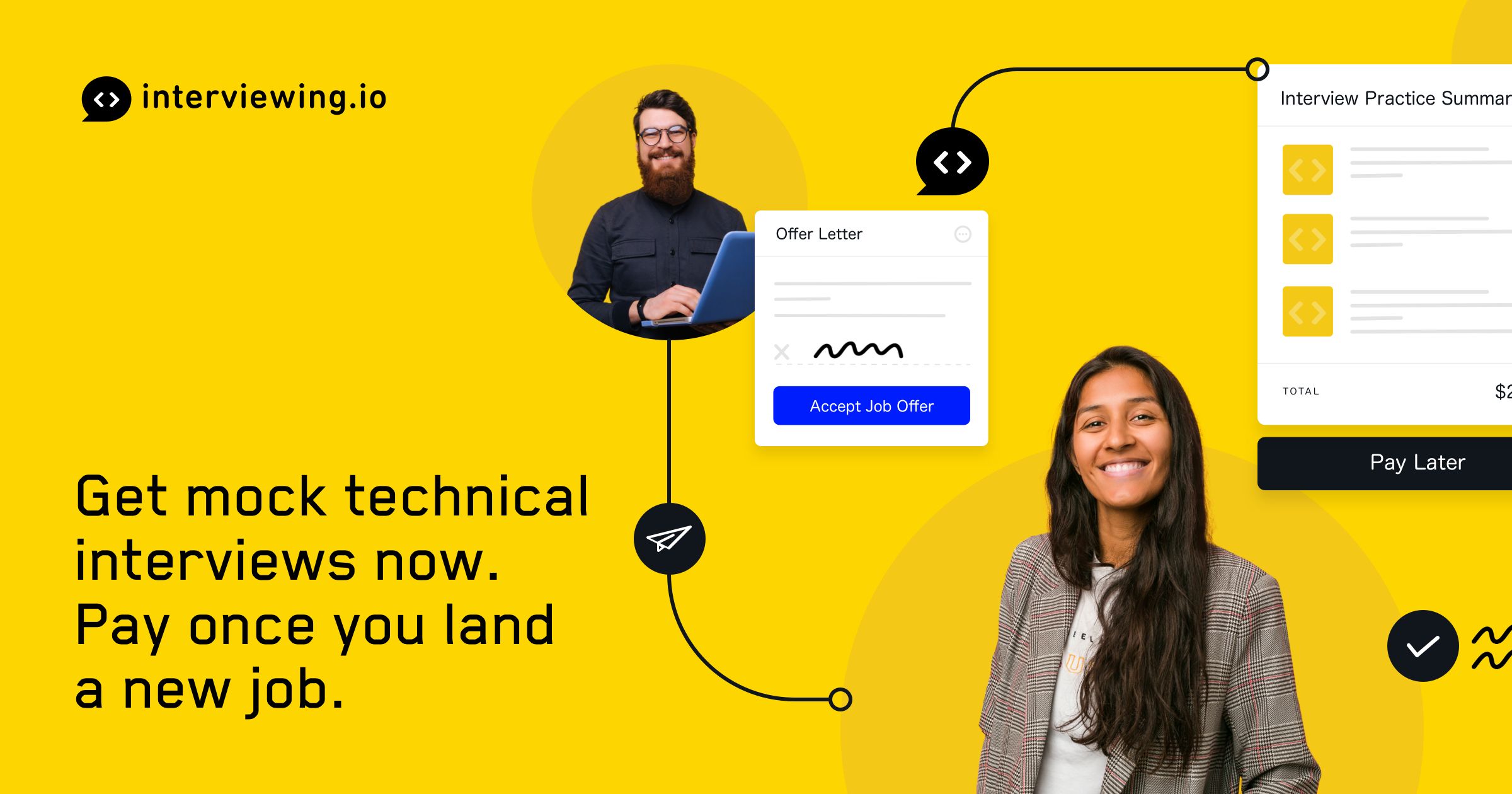
Interviewing.io connects you with anonymous interviewers, many of whom are current or former engineers at top tech companies. Sessions are conducted over voice (no video), and you get detailed feedback after each mock. The platform also records sessions so you can review your performance later.
The big draw is the interviewer pool. These aren't random peers — they're engineers who've actually conducted interviews at companies like Google, Meta, and Amazon. Some sessions are free (when available), but the core product is paid, and it's not cheap.
If you perform well in mocks, Interviewing.io can also connect you directly with hiring companies, effectively turning practice into a pipeline.
Cost Breakdown: Free vs. $225+
This is where the conversation gets real.
Pramp is completely free. No premium tier, no credit card required, no feature gating. You get unlimited mock interviews at zero cost. For someone early in their prep journey or working with a tight budget, that's a massive advantage. You can book multiple sessions per week without thinking twice.
Interviewing.io operates differently. While they occasionally offer free sessions, the core paid experience runs $225 or more per session with a senior engineer from a top company. That adds up fast — five sessions and you're past $1,000.
Is the quality difference worth the price jump? That depends entirely on where you are in your prep. If you're still building fundamentals, spending $225 for an expert to watch you stumble through a medium-difficulty array problem isn't a great use of money. If you're two weeks out from a Google on-site and need to pressure-test your performance under realistic conditions, the investment math changes completely.
For a full breakdown of what Interviewing.io actually costs across their different session types and packages, check out our Interviewing.io Pricing Breakdown.
Platform Availability and Wait Times
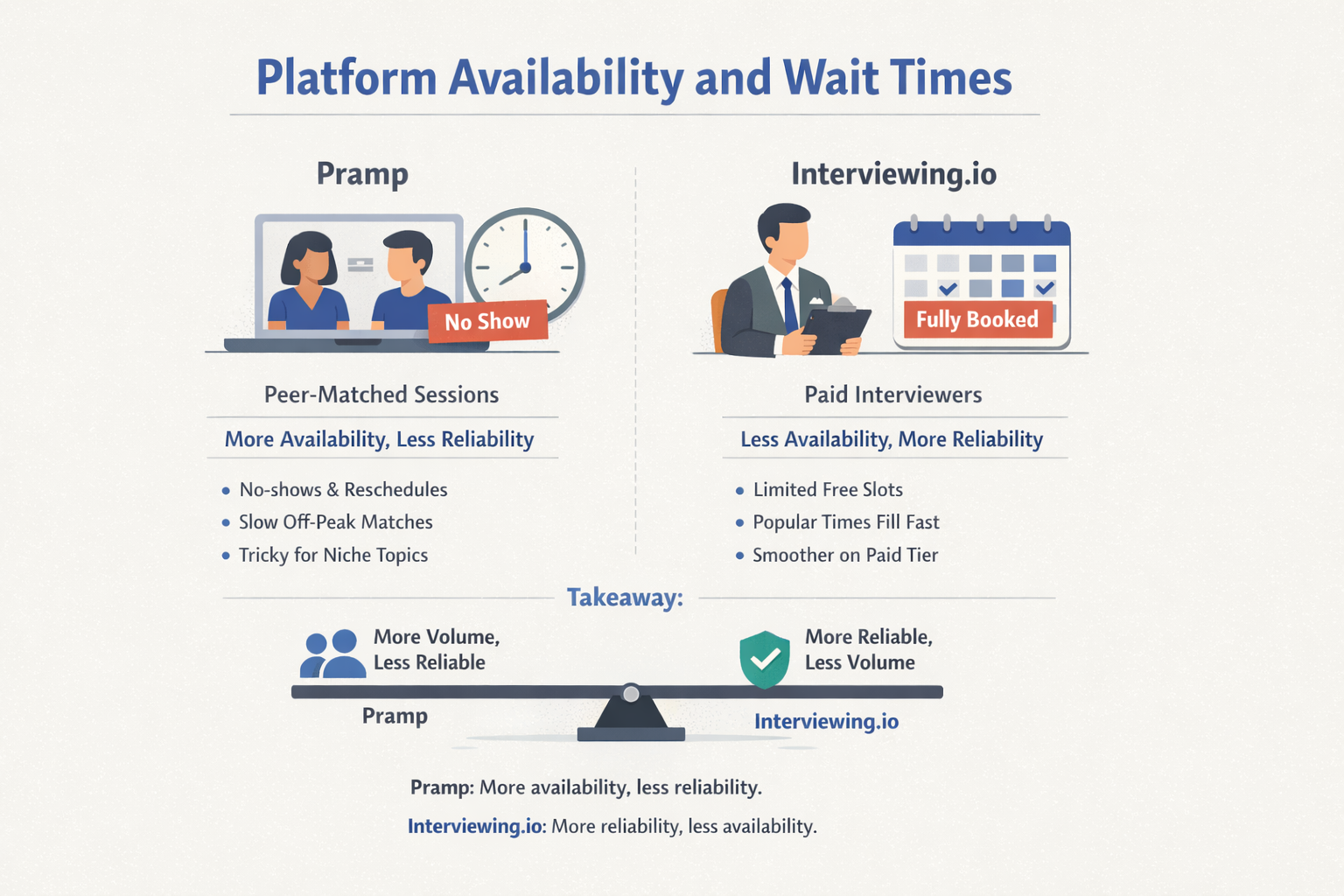
Pramp's availability is generally solid, but it comes with trade-offs. Because it's peer-matched, your session depends on another person showing up. No-shows happen. Rescheduling happens. And during off-peak hours, you might struggle to find a match at all, especially for less popular categories like system design or behavioral.
Interviewing.io tends to have tighter scheduling since interviewers are compensated and committed. But availability is more limited overall — popular time slots fill up quickly, and free sessions are scarce. If you're on the paid tier, booking is smoother, but you're still working within the platform's interviewer supply.
The practical takeaway: Pramp gives you more volume with less reliability. Interviewing.io gives you more reliability with less volume (unless you're willing to pay for it).
Who Should Use Pramp?
Pramp is the right call if you're in the early-to-mid stages of interview prep and need reps. Lots of reps.
You should lean toward Pramp if:
- You're still building confidence talking through problems out loud — the jump from solving alone to solving in front of someone is bigger than most people expect
- You want to practice being the interviewer too, which is quietly one of the best ways to learn what good answers actually look like
- You're prepping on a budget and can't justify $225+ per session
- You're early in your timeline with months before your target interviews, and need a low-stakes environment to make mistakes
The biggest downside is feedback quality. Your peer partner might give you a thumbs up and say "that was great" when your solution had three edge case bugs and your communication was unclear. You have to be honest with yourself about what you're getting.
Pro tip: Use Pramp for volume and pattern recognition. After 10-15 peer sessions, you'll start noticing what good communication feels like versus what rambling feels like. That self-awareness is worth more than most feedback you'll receive.
Who Should Use Interviewing.io?
Interviewing.io makes sense when you're past the fundamentals and need signal — real, calibrated feedback from someone who knows what "bar" actually means at a top company.
You should lean toward Interviewing.io if:
- You're within 2-4 weeks of actual interviews and need to simulate real conditions
- You want feedback from engineers who've conducted hundreds of real interviews, not peers who are guessing at evaluation criteria
- You've been prepping for a while but can't tell if you're actually ready or just comfortable with your routine
- You're targeting specific companies and want interviewers who know what those companies look for
The anonymous voice-only format is also worth mentioning. It strips away the social awkwardness of video calls and mimics the pressure of a real phone screen surprisingly well.
The downside beyond cost is that one session, even a great one, gives you a single data point. You need multiple reps to see real patterns, and at $225+ each, that adds up to a serious investment.
What Neither Platform Gives You
Here's what nobody in the Pramp vs. Interviewing.io debate talks about: neither platform gives you a structured path to get ready for those mock interviews in the first place.
Pramp doesn't tell you which problems to study or when you're ready to book a session. Interviewing.io doesn't build your fundamentals — it stress-tests them. Both platforms assume you've already done the prep work. If you haven't, you're paying (in time or money) to discover your gaps instead of closing them.
Mock interviews are a tool, not a strategy. They fit into a larger system: identify your gaps, build the skills, practice under pressure, then refine based on feedback.
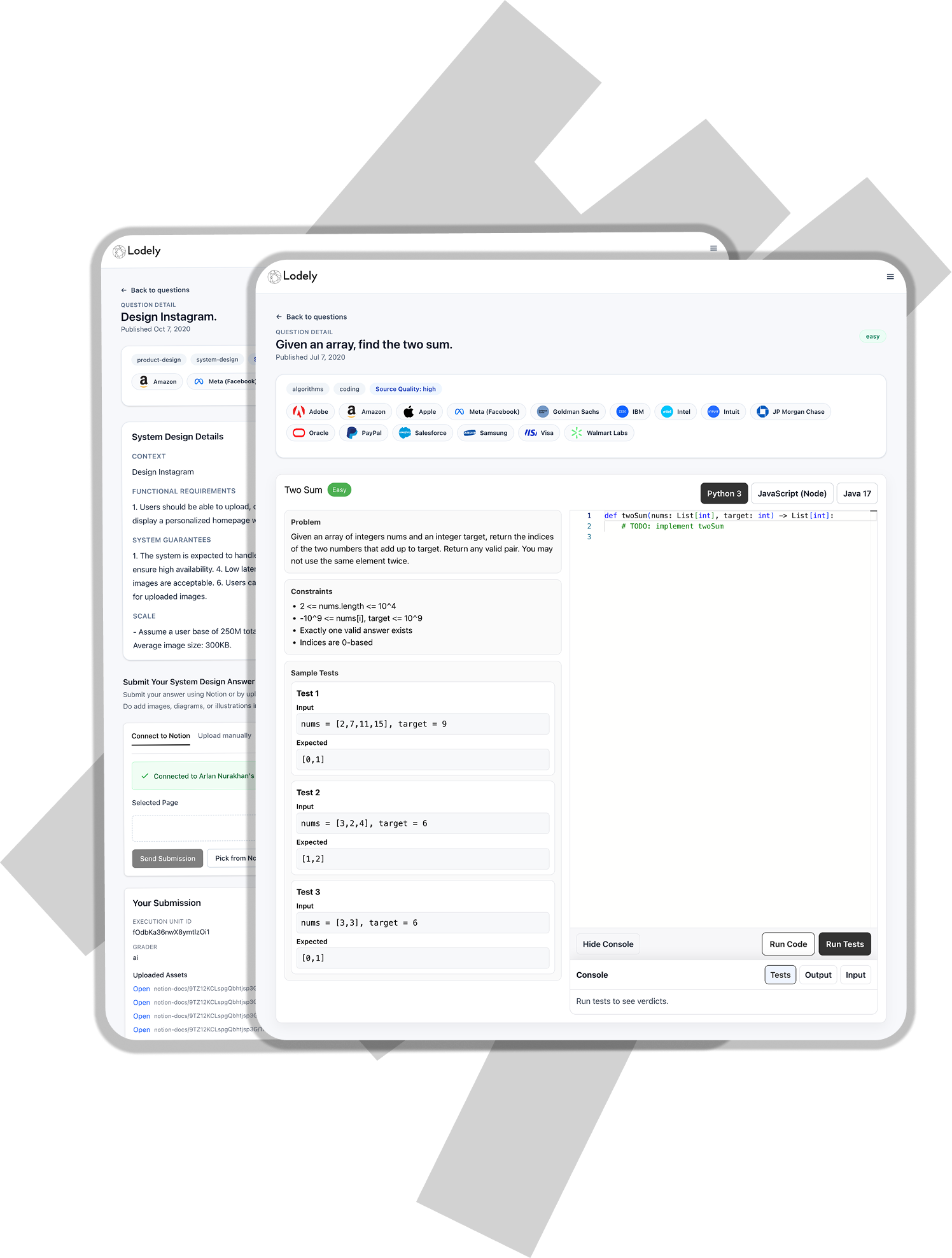
That's exactly why we built Lodely. Instead of handing you another pile of problems to grind through, Lodely gives you a guided path that tells you exactly what to work on next — across coding, system design, and behavioral prep — based on where you actually stand. Every question in the platform comes from real interviews at 1,000+ companies, not invented practice problems. And when you need a human in the loop, 1:1 coaching with an engineer who's been through the process at Google and Meta can tell you exactly when you're ready to book those mocks and when you need another week on trees. It's the difference between wandering through prep and executing a plan that's built around how you actually get offers.
Side-by-Side Comparison
The Bottom Line
Don't overthink this. If you're early in prep and need to get comfortable solving problems out loud, start with Pramp. It's free, it's available, and the sheer volume of practice will accelerate your growth faster than watching another YouTube walkthrough.
When you're closer to your target interviews and need to know if you're actually ready, that's when Interviewing.io (or a career coach) earns its price tag.
The engineers who land offers at top companies don't pick one tool and hope for the best. They use the right tool at the right stage — and they make sure they're following a structured plan before they ever book a mock interview.
✉️ Get free faang interview cheat sheet and interview tips weekly
✉️ Get free faang interview cheat sheet and interview tips weekly