





10 Confluent Interview Questions to Expect in 2026

Confluent interviews often include a recruiter screen, coding, system design, and a hiring-manager interview. The full process can take several weeks. Senior candidates may also discuss Linux, networking, concurrency, and memory. Interviewers assess clean coding and reasoning about stateful distributed systems.
What to Expect: Confluent Interview Process
The process includes a recruiter conversation, an online or live coding interview, a system-design interview, and later meetings with the team and hiring manager. Internship loops may be shorter, while senior loops may examine operating systems and architecture in more depth. Ask whether the role focuses on Kafka, cloud infrastructure, connectors, or the product surface because the technical stack varies.
Prepare to discuss large-scale systems you have implemented, including their design decisions and implementation details. Recent articles also cover concurrency, databases, memory, failure recovery, and your motivation for changing roles.
How to Prepare and Pass Confluent Interviews
Plan six weeks if you know distributed-systems basics. Spend two weeks on coding and data structures, two on streaming architecture and state, and two on Linux, networking, and behavioral stories. Plan eight weeks if you have not debugged production concurrency or performance problems recently.
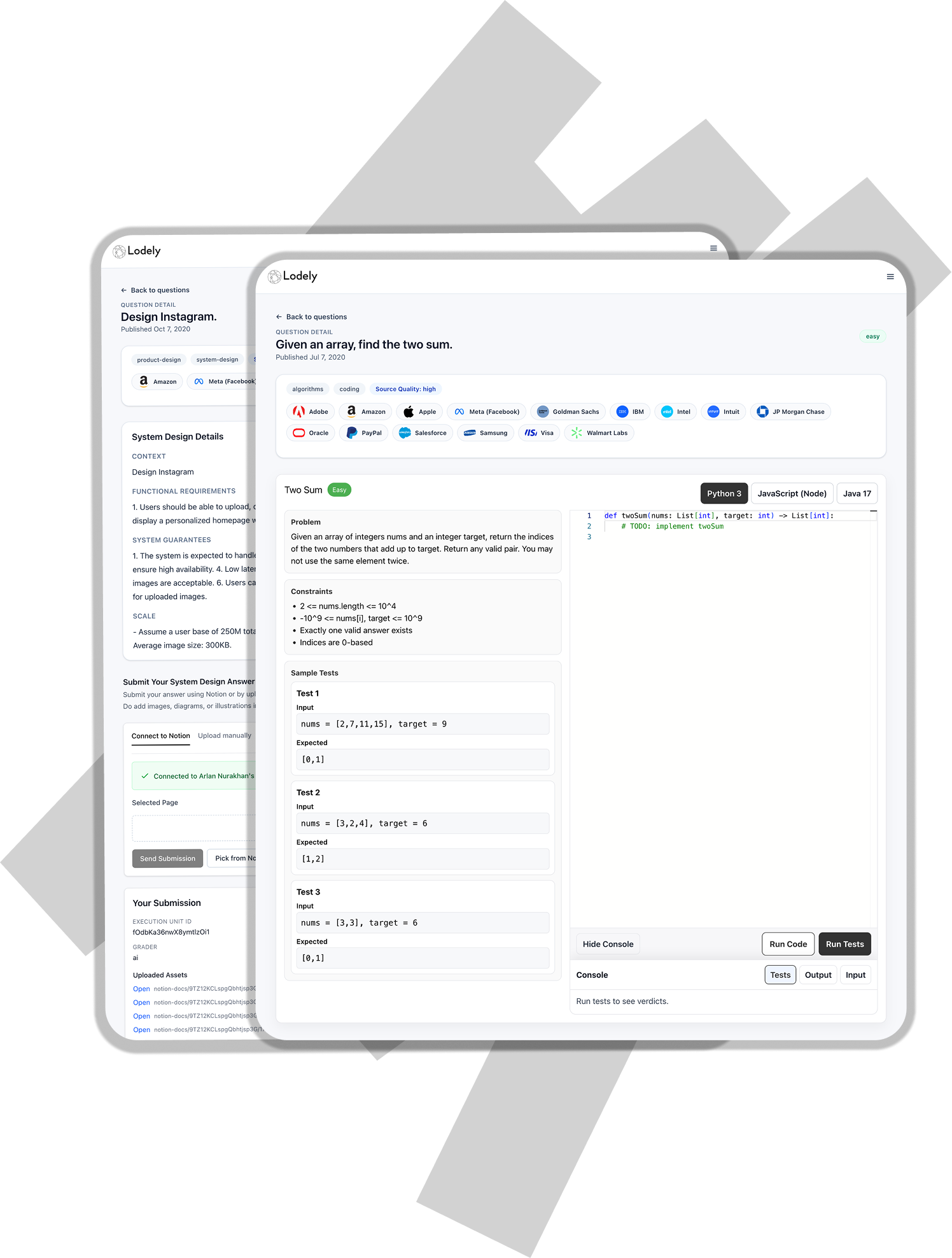
Practice the Confluent set on Lodely, including caches, windows, pattern matching, and implementation under constraints. Explain each solution's memory usage and behavior during retries and partial failures.

Confluent Interview Breakdown
Implement LRU Cache
function lruCacheOperations(operations, arguments)- Design a data structure that follows the constraints of a Least Recently Used (LRU) cache.
- Implement the LRUCache class: LRUCache(int capacity) initializes the cache with positive size capacity. int get(int key) returns the value of the key if it exists, otherwise returns -1. void put(int key, int value) updates the value if the key exists, otherwise adds the key-value pair.
- If the number of keys exceeds the capacity, evict the least recently used key.
- The get and put operations must each run in O(1) average time complexity.
1 <= capacity <= 30000 <= key <= 10^40 <= value <= 10^5At most 2 * 10^5 calls will be made to get and put
['LRUCache', 'put', 'put', 'get', 'put', 'get'], [[2], [1,1], [2,2], [1], [3,3], [2]]
[null, null, null, 1, null, -1]
['LRUCache', 'put', 'get', 'put', 'get', 'get'], [[1], [1,10], [1], [2,20], [1], [2]]
[null, null, 10, null, -1, 20]
Type: Hash map with a linked list. The Trick: Store each node as a separate entry so you can remove and insert nodes without affecting the linked list. What It Tests: Constant-time operations, invariants, and implementation discipline.
Check Aliveness
Type: Health tracking with time-based state. The Trick: Define the boundary between alive and stale, including how delayed or duplicate signals behave. What It Tests: Expiration logic, clock assumptions, and interface design.
Function Matching
Type: Constraint matching. The Trick: Normalize signatures and choose an index that supports the required wildcard or compatibility rules. What It Tests: Data modeling, indexing, and edge-case handling.
Windowed Map and Windowed Average test time-based eviction. Monster Fights, Buying Chairs, Minimum Cost Combo, and Minimum Health Required for Gaming test greedy and dynamic approaches. Wildcard Matching and Sudoku Validation test careful state transitions and edge cases.
What Comes After The Interview
System-design feedback can affect the outcome for senior roles even when coding rounds go well. Reported U.S. compensation rises from L2 to staff, and equity makes up more of the package at higher levels. Compare base salary, equity, bonus, vesting, and the announced IBM acquisition's effect on outstanding and new grants.
Candidate Experiences
One recent engineering intern described a recruiter call covering background and expectations, followed by an online assessment. The company did not respond after the candidate followed up. Confirm the expected response time before investing time in each assessment.
Conclusion
Confluent values engineers who build precise stateful components and reason about them at scale. Practice the ten questions on Lodely, then review concurrency and failure handling.
✉️ Get free faang interview cheat sheet and interview tips weekly
✉️ Get free faang interview cheat sheet and interview tips weekly