


Wayfair Online Assessment: Questions Breakdown and Prep Guide

Thinking about tackling Wayfair’s OA but not sure what flavor of challenge you’ll get? You’re not alone. Wayfair’s assessments blend classic DSA with e‑commerce problems: inventory allocation, shipping constraints, nearest-warehouse selection, and clickstream analytics. If you want to walk in prepared and calm, this guide is your roadmap.
No fluff. Real breakdowns. Strategic prep.
When to Expect the OA for Your Role
Wayfair’s OA timing and content vary by role, level, and team.
- New Grad & Intern (SWE)
- Most candidates receive a Codility or HackerRank invite 3–10 days after a recruiter screen. For internships, it’s often the only technical screen prior to the final loop.
- Software Engineer (Backend / Full-Stack / Mobile)
- Expect 2–3 coding questions in 75–90 minutes via Codility or HackerRank. Emphasis on arrays, hashing, graphs, greedy, and e‑commerce flavored scenarios.
- Data Engineering / Analytics Engineering
- You may see a split: one coding OA (DSA) and one SQL OA. SQL often includes window functions, aggregations, and event/session problems.
- SRE / Platform / Infra
- OA includes standard coding plus reliability-tinged tasks (rate limiting, log parsing, queue/drain time calculations).
- Senior Engineering Roles
- Some candidates skip a generic OA and move straight to live coding/system design, but many still receive a short OA to calibrate.
Action step: When you get the scheduling email, ask the recruiter for the platform, duration, number of questions, languages allowed, and whether there’s also a SQL portion.
Does Your Online Assessment Matter?
Short answer: yes. It’s a primary filter and a tone-setter.
- It’s the main gate. A strong resume earns the invitation; a strong OA earns the interview loop.
- It’s reused. Your OA code may be reviewed by interviewers later and can seed follow‑up questions.
- It mirrors reality. Wayfair’s challenges reflect high-SKU catalogs, fulfillment constraints, log-scale data, and correctness under edge cases.
- It signals craft. Reviewers look for clarity, naming, tests, and complexity awareness—not just passing sample cases.
Pro tip: Treat the OA like a live interview. Write clean code, handle edge cases (empty inputs, duplicates, large values), and include brief comments where they clarify intent.
Compiled List of Wayfair OA Question Types
Candidates report seeing mixes of these categories. Practice them:
- Top K Frequent Elements — Heap / Hash Map
- Product of Array Except Self — Prefix/Suffix
- [K Closest Points to Origin] (nearest warehouse analogue) — LeetCode — Heap / Geometry
- Capacity To Ship Packages Within D Days — Binary Search on Answer / Greedy
- Merge Intervals — Sorting / Intervals
- Meeting Rooms II — Sweep Line / Min-Heap
- [Group Anagrams] (SKU normalization analogue) — LeetCode — Hashing
- Accounts Merge — Union-Find / Graph
- LRU Cache — Design / HashMap + DLL
- Design Hit Counter / Rate Limiter — Queue / Sliding Window
- Longest Substring Without Repeating Characters — Sliding Window
- Binary Tree Level Order Traversal — BFS
- Task Scheduler — Greedy / Heap
- Merging K Sorted Lists — Heap / Divide & Conquer
Optional for data roles (SQL practice): windowed sessionization, top‑N within groups, deduplicating user accounts, rolling 7‑day metrics, and funnel conversion rates.
How to Prepare and Pass the Wayfair Online Assessment
Think of this as training for reflexes, not just memorizing patterns.
1. Assess Your Starting Point (Week 1)
- Run a mock on HackerRank/LeetCode timed contests to gauge your current speed.
- Tag your strengths (arrays, hashing, two pointers) and gaps (graphs, DP, binary search on answer).
- For data roles, run a SQL self‑check: joins, window functions (ROW_NUMBER, LAG/LEAD), time bucketing.
2. Pick a Structured Learning Path (Weeks 2-6)
- Self-study tracks (LeetCode Top 100, Blind 75, HackerRank Interview Prep)
- Best for self‑starters; build a consistent daily cadence.
- OA simulators and timed mocks
- Use Codility practice tasks or third‑party OA mirrors to get used to proctoring and strict timers.
- Mentorship or review partner
- Pair with a friend/coach for code reviews focused on clarity, tests, and edge-case handling.
3. Practice With Realistic Problems (Weeks 3-8)
- Build a set of 40–60 problems from the list above plus e‑commerce analogues:
- Inventory allocation to multiple orders
- Shipping capacity and batching
- Nearest facility/warehouse selection
- Top‑K products by clicks or orders within a time window
- Time every session. After solving, refactor for readability and verify complexity.
4. Learn Wayfair-Specific Patterns
Expect e‑commerce and logistics themes:
- Inventory reservation/allocation across warehouses
- Shipping capacity within SLA days (binary search on answer)
- Nearest-warehouse or k‑closest facilities (heap / distance calc)
- Sessionization and clickstream analytics (sliding window, hash maps)
- Catalog deduplication and SKU normalization (string hashing, canonicalization)
- Cents over floats for currency (use integers to avoid rounding issues)
Backend candidates may also see:
- Cache design (LRU/LFU trade‑offs)
- Rate limiting / hit counters
- Log parsing and anomaly detection (prefix sums, regex optional)
Data/Analytics candidates:
- SQL window functions for retention, conversion funnels, and top‑N per category
- ETL-style joins with deduplication rules
5. Simulate the OA Environment
- Use a single language you’re fastest in; stick to standard libraries.
- Practice with 75–90 minute blocks; no internet, no notes.
- Get comfortable with platform I/O, reading from stdin, and writing utility helpers quickly.
- If proctored, test your environment (webcam, IDE restrictions) beforehand.
6. Get Feedback and Iterate
- Track misses (off‑by‑ones, overflow, data structure choice).
- Re-solve failed problems 48 hours later without peeking.
- Share solutions for review; focus on naming, structure, and test coverage.
Wayfair Interview Question Breakdown

Here are featured sample problems inspired by Wayfair’s OA style. Master these patterns and you’ll cover most of what appears.
1. Inventory Allocation to Orders
- Type: Greedy / Hash Map
- Prompt: Given inventory across multiple warehouses and a single customer order (quantities per SKU), allocate items from warehouses to fulfill the order minimizing shipments or following given priority (e.g., left-to-right warehouse priority).
- Trick: Tally order need per SKU; iterate warehouses and decrement needs greedily while building an allocation map. Mind zero-quantity SKUs and partial fills.
- What It Tests: Hash maps, greedy reasoning, careful edge handling, and producing structured output.
2. K Closest Warehouses
- Type: Heap / Geometry
- Prompt: Given coordinates of warehouses and a delivery location, return the k nearest warehouses by Euclidean distance.
- Trick: Use a max‑heap of size k storing (distance, index) or a quickselect partition. Avoid sqrt by comparing squared distances.
- What It Tests: Heap management, performance trade‑offs (heap vs quickselect), and numerical care.
3. Shipping Capacity Within D Days
- Type: Binary Search on Answer / Greedy
- Prompt: Given package weights and a day limit D, find the minimum ship capacity to deliver all packages in order within D days.
- Trick: Binary search capacity in [maxWeight, sumWeights]. Greedy simulate days for a candidate capacity.
- What It Tests: Binary search patterns, feasibility checks, and time complexity discipline.
4. Top‑K Products by Clicks in a Sliding Window
- Type: Sliding Window / Heap or Ordered Map
- Prompt: Given a stream of (timestamp, productId), return the top‑K products in the last T minutes for each event.
- Trick: Maintain a window queue; decrement counts when events expire; track top‑K via heap or ordered map. Consider ties and eviction.
- What It Tests: Window maintenance, frequency tracking, and throughput‑aware data structure choices.
5. Deduplicate Customer Accounts
- Type: Union-Find / Graph
- Prompt: Merge customer profiles that share any identifier (email, phone). Output merged groups with combined identifiers.
- Trick: Build DSU keyed by unique identifiers; union across each profile’s identifiers; then group by DSU root.
- What It Tests: Disjoint set operations, graph connectivity, and clean output formatting.
What Comes After the Online Assessment

Passing the OA opens the door to deeper evaluation—design, communication, and fit.
1. Recruiter Debrief & Scheduling
- Expect an email within a few days. You’ll get timelines and next‑round structure.
- Ask about interview focus areas (more DSA, system design, SQL) and language preferences for live rounds.
2. Live Technical Interviews
- Algorithm & DS: Similar to OA but interactive. Explain trade‑offs as you code.
- Debugging/Refactoring: Improve or fix a working solution under constraints.
- For data roles: SQL whiteboarding or collaborative editors with window functions and real datasets.
Pro tip: Review your OA code before these rounds—interviewers may reference your approach.
3. System Design / Architecture Round
- Mid-level and senior candidates design systems like:
- Product recommendation feed or personalization service
- Inventory reservation and order orchestration
- Search autocomplete with ranking and caching
- Evaluated on: requirements gathering, APIs, storage models, scaling strategies, data consistency, and failure handling.
4. Behavioral & Values Interviews
- Expect questions on ownership, iteration speed, and data-driven decisions.
- Use STAR to structure responses. Highlight cross‑functional collaboration with product, analytics, and operations.
5. Final Round / Onsite Loop
- 3–5 interviews in one block:
- Coding
- System design
- Behavioral
- Role-specific deep dive (e.g., analytics case or platform reliability scenario)
- Manage energy: brief pauses, clarify requirements, and narrate thinking.
6. Offer & Negotiation
- Packages typically include base, bonus, and equity.
- Come prepared with market data and your priorities (comp, team, scope, location/hybrid).
Conclusion
You don’t need to guess—you need a plan. If you:
- Identify weak spots early,
- Practice Wayfair‑style problems under time pressure,
- Write clean, robust code with edge cases covered,
you’ll convert the OA from a hurdle into momentum for the rest of the process. Focus on e‑commerce patterns, simulate the real environment, and communicate clearly. That’s how you walk into each stage confident and prepared.
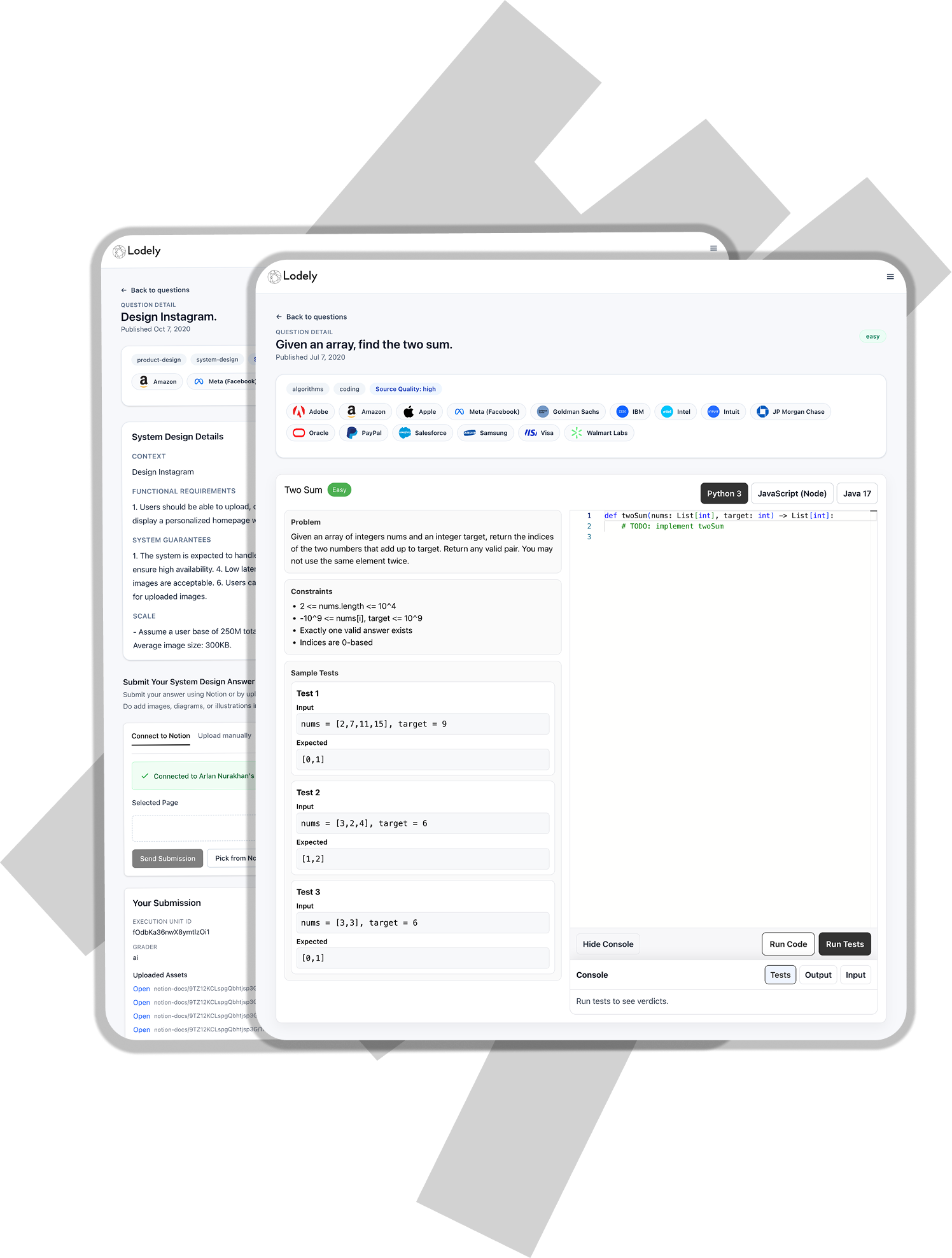
For more practical insights and prep strategies, explore the Lodely Blog or start from Lodely’s homepage to find guides and career resources tailored to software engineers.
✉️ Get free faang interview cheat sheet and interview tips weekly
✉️ Get free faang interview cheat sheet and interview tips weekly


