Zip Interview Questions in 2026: 9 Examples

Zip software engineering interviews use practical coding screens and back-to-back technical rounds that may involve extending existing codebases, reasoning about models, and testing your changes. One recent new-grad account described a technical screen, two consecutive technical sessions, and a hiring-manager conversation only after technical approval.
What to Expect: Zip Interview Process
The recruiter conversation covers your background and the position. Technical work may involve a small production task in an existing codebase. Recent candidates have described pair programming across multiple files and extending an existing project. Interviewers can assess algorithm fluency along with how you read unfamiliar code, preserve behavior, and add tests.
How to Prepare and Pass Zip Interviews
Plan for 4-6 weeks. Alternate timed algorithm exercises with repository-sized exercises. For the repository-sized exercises, follow a model, change one requirement, write tests, and describe how you could avoid breaking current callers.
Create one small repository with one model file, one service file, and one test file. After you understand the current code's design, have a partner propose a new enum value or relationship. Find the construction paths and current tests before changing anything. Run all tests after the change and explain which compatibility risk you checked first. This closely mirrors work in a real codebase.
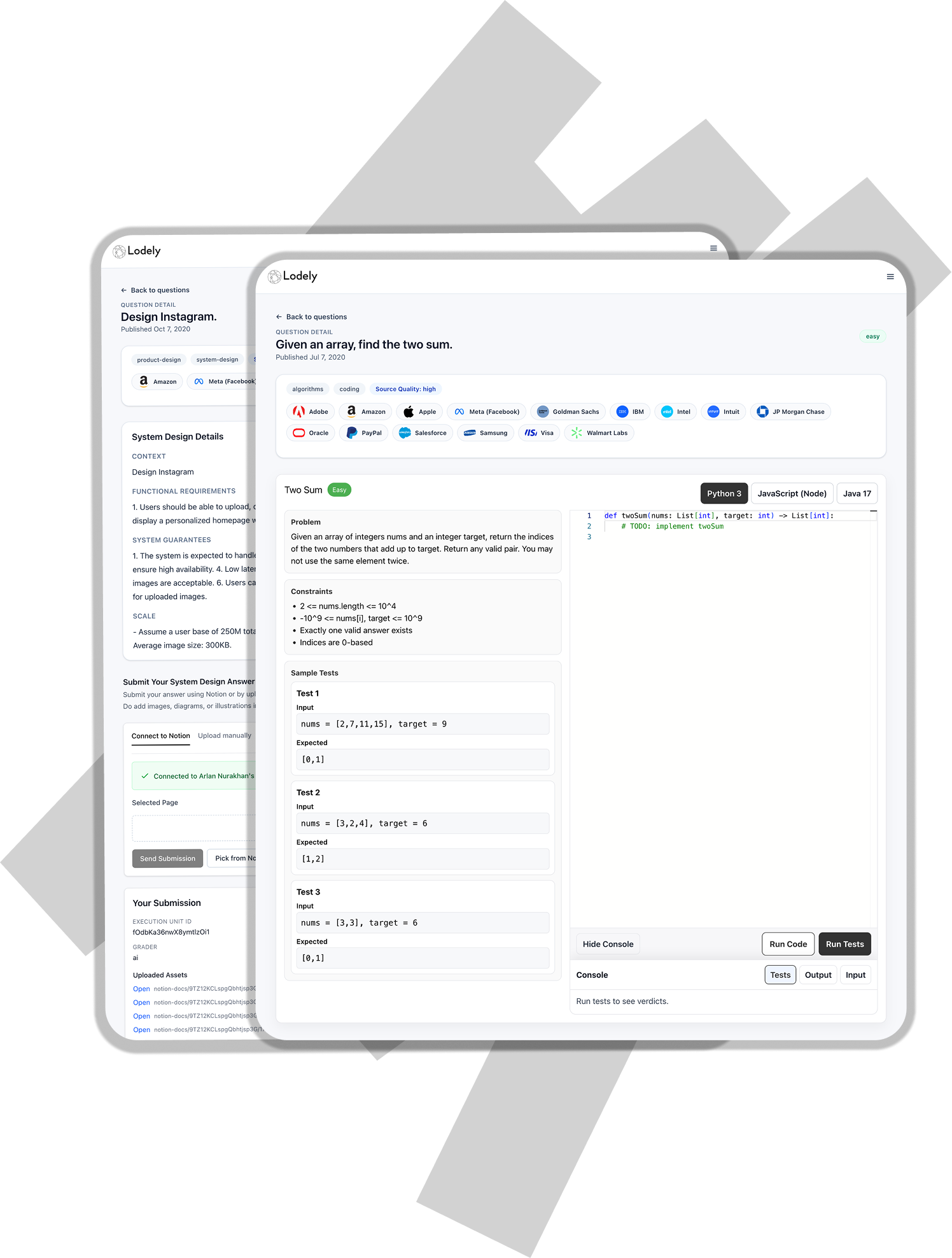
State your goal before editing. Explain what must remain invariant, which files you expect to change, and which test cases you plan to run. Ask the interviewer to confirm your test plan. Lodely ties algorithm practice to Zip and provides editorials for the Zip questions in its library.

Zip Interview Breakdown
Winning Tiles
Type: Search with memoization or dynamic programming. The Trick: A tile set can have several valid groupings, so a greedy grouping algorithm may fail to group a valid hand. What It Tests: State design, pruning, and correctness.
Root IDs
Type: Set and relationship processing. The Trick: The IDs in the input define a root, so establish a clear rule for missing or external parents. What It Tests: Data modeling, parsing, and edge cases.
Taxi Driver
Type: Grid navigation with barriers. The Trick: The obstacle structure determines the state space to explore on the infinite grid. What It Tests: Modeling, graph traversal, and boundary reasoning.
The other six questions cover a wider practical range. Minimum Turns uses shortest-path search over lock states. Furthest Distance allocates limited climbing resources. Conditional Check extends a model and its tests. Convert email parses structured text. Party Invite optimizes over a reporting tree, and Find Path finds the shortest route through a blocked grid.
What Comes After The Interview
The hiring-manager conversation can depend on passing the technical loop. If an offer follows, recent U.S. reports show total compensation of about $195K for a new-grad package and $255K at L4, including $45K and $75K per year in equity, respectively.
Candidate Experiences
One recent software engineering candidate described a relaxed recruiter conversation about their background and the company. The first technical round required extending a provided system across several files, which differed from the single-function exercises the candidate had expected. The candidate viewed the interaction positively but didn't receive an offer. Practice navigating code aloud while producing the final patch.
Conclusion
Zip requires practical implementation, clear modeling, and visible testing. Work through these nine Zip questions using Lodely, then repeat the most important questions in a small multi-file project.
✉️ Get free faang interview cheat sheet and interview tips weekly
✉️ Get free faang interview cheat sheet and interview tips weekly