Anthropic Online Assessment 2025: Questions Breakdown and Prep Guide


Most people search for “Anthropic OA” after realizing they don’t actually know what this assessment looks like — just that it’s tougher, faster, and nothing like the usual coding tests.
That uncertainty can eat at you, especially when you don’t want to blow a chance at a company you’re aiming for.
We get that feeling, and that’s exactly why this guide exists. Everything here is meant to give you a clear picture of how the OA works and how to prepare for it without guessing.
Anthropic Online Assessment (OA) Overview
%20Overview.jpg)
Anthropic’s online assessment (often called the Anthropic OA or Anthropic CodeSignal) is the timed coding test most technical candidates face early in the interview process.
It’s usually hosted on CodeSignal and acts as an automated filter before you talk to engineers.
The purpose of this step is simple: Anthropic uses the OA to quickly identify candidates who can write correct, reliable code under time pressure and handle problems that feel closer to small system-building tasks rather than isolated algorithm puzzles.
It’s their way of confirming you have the core engineering fundamentals needed to continue in the process.
How Does Anthropic OA Work?
Instead of multiple separate questions, Anthropic’s OA gives you one problem that grows in difficulty as you go. You’re scored on how well you adapt to each new requirement, making it more intense than a typical LeetCode-style test.
Level-by-Level Structure
The assessment is split into four levels, all tied to the same core problem.
You have about 90 minutes to get through everything, and you can only move forward once the current level fully passes its tests.
Here’s how it generally flows:
- Level 1: Simple core implementation
- Level 2: New constraints or extra functionality
- Level 3: More complex state management
- Level 4: Final, most difficult extension under time pressure
This structure forces you to build cleanly from the start, because your Level 1 code becomes the foundation for Level 4.
Timing + Pressure Mechanics
With only 70–90 minutes on the clock, the assessment quickly becomes a test of pace and clarity.
You write your first version, adjust it the moment tests begin failing, and expand it whenever the next stage requires new behavior.
Everything happens inside CodeSignal’s environment.
The editor is browser based. Tests are hidden. Scoring is automated. Some candidates even mention cameras on proctoring, which increases the feeling of being observed throughout the session.
The combination of strict timing and a single growing problem turns the OA into a fast paced coding sprint rather than a calm step by step interview.
What Anthropic Is Actually Testing
The OA is less about “can you solve this algorithm?” and more about “can you build a tiny, well-behaved system under pressure?”
At a high level, Anthropic is checking whether you can:
- Translate requirements into a clean implementation
- Adapt your code as the spec evolves from Level 1 to Level 4
- Solve problems fast, without sacrificing correctness
- Manage state, data structures, and system behavior across multiple operations
- Stay calm and accurate as pressure builds
This is why the OA often resembles building an in memory database or a lightweight storage system. The goal is to understand how you think, how you structure solutions, and how you perform when the challenge keeps expanding.
What Questions Are Asked During Anthropic’s Online Assessment?

This section covers the kinds of problems you may face in the OA—not exact full solutions, but realistic problem patterns so you know what to expect.
- In-Memory Database Problem
- Cloud Storage or File System Simulation Problem
- Inventory or Item Management Problem
- Multi-Operation Query Processor Problem
- Logger Rate Limiter Problem
- In-Memory File System Problem
- Hit Counter or Time-Window Tracking Problem

1. In-Memory Database Problem
This one shows up a lot in candidate reports, and honestly, it makes sense.
You’re essentially building a tiny key–value store that can set values, fetch them, and sometimes undo or layer operations as the levels progress.
Think of it like writing the simplest version of Redis… but under a timer.
Why Anthropic May Ask This Problem
Why would Anthropic use this? Because it reveals how you think about the state. If your solution falls apart the moment the problem expands, they see it immediately.
Clean data structures, predictable behavior, and a design that survives multiple upgrades — that’s the whole point of the OA, and this problem exposes whether you can do it or not.
2. Cloud Storage or File System Simulation Problem
This one feels a bit like building a mini Dropbox in memory.
You track directories, files, metadata, and you operate on them through commands like create, list, and read.
Later levels usually add more rules that stress-test whatever structure you built earlier.
Why Anthropic May Ask This Problem
Anthropic uses problems like this because they force you to build something hierarchical and realistic.
Anyone can brute-force a list problem, but modeling a small system that behaves consistently as requirements pile on… that’s different.
It shows whether you can write code that grows without getting messy.
3. Inventory or Item Management Problem
Inventory systems are deceptively simple.
You’re juggling items, quantities, copies, maybe even versions — and every operation you support has to keep the entire system consistent.
If you take shortcuts early on, you usually pay for it when the later levels appear.
Why Anthropic May Ask This Problem
Anthropic likes this pattern because it tests how you handle “business logic” in code.
It’s straightforward enough to implement quickly, but complicated enough to reveal how disciplined you are.
They want to see if you think in terms of structs, classes, and clear state transitions, not ad-hoc patching.
4. Multi-Operation Query Processor Problem
You’ve probably seen variations of this before.
You receive a sequence of commands, one after another, and your job is to keep your internal state updated and return the right values every time.
Then each new level throws extra commands or tricky edge cases into the mix.
Why Anthropic May Ask This Problem
This problem shows Anthropic how well you can handle continuous input. Real systems rarely run once — they run all the time.
If your internal model is brittle, it breaks the moment the rules change. The OA wants to see that you can think in terms of engines, not one-off functions.
5. Logger Rate Limiter Problem
This is the classic “don’t print the same message too frequently” problem.
It’s all about tracking messages with timestamps and making quick decisions based on history. It’s small, but it’s a great intro to time-based state handling.
Why Anthropic May Ask This Problem
Why it fits the Anthropic style: it forces you to write something that maintains the right behavior over dozens of inputs. It’s not about cleverness — it’s about designing a tiny component that just works, even when the clock is ticking.
6. In-Memory File System Problem
This one pushes you to build something that looks like a real directory tree: nested folders, files, and operations that mutate that structure in predictable ways.
It is a direct match to the “cloud storage” problems reported in Anthropic’s OA.
Why Anthropic May Ask This Problem
Anthropic likes problems like this because they immediately show whether you can organize data into a clean, extensible format. If you build the wrong structure, you hit a wall fast.
If you build the right one, the later levels feel natural instead of painful. That’s exactly the kind of engineering instinct they’re testing for.
7. Hit Counter or Time-Window Tracking Problem
This is a sliding window problem where you’re counting events that happened in the last few seconds or minutes.
The tricky part is keeping old data out of the way while still answering queries instantly.
Why Anthropic May Ask This Problem
Anthropic’s OA leans heavily toward problems like this because they reward clarity. If you overcomplicate it, you drown.
If you think in terms of clean queues or timestamp batching, it feels effortless. It’s a great way to reveal how you approach real-time state.
How to Prepare for Anthropic’s OA

If you want to do well in Anthropic’s OA, you need to prepare the same way the test behaves: system-first thinking, fast iteration, and code that survives multiple upgrades. That’s the whole game.
So instead of grinding 200 random LeetCode problems, here’s how I’d get you ready if we were prepping together.
Focus on System-Style Problems, Not Pure Algorithms
Anthropic isn’t testing whether you can solve trick puzzles. They want to see if you can build a small system and keep it stable as the rules evolve.
So work on problems where you’re:
- designing data structures
- managing state
- handling multiple commands
- extending functionality without rewriting everything
This mirrors the actual OA patterns we covered earlier: in-memory DBs, file systems, inventory systems, and command processors. The more comfortable you are building tiny “services,” the smoother the OA will feel.
Practice Coding Under Real Time Pressure
The OA gives you seventy to ninety minutes to get through four levels. That’s not a lot of time, so you want to get used to writing working code quickly, not perfectly.
A good rhythm looks like this:
• ten to fifteen minutes to get the base version running
• immediate fixes when tests fail
• fast adjustments as new stages unlock
Think of it as sprinting in controlled bursts. If you train yourself to write a correct first version instead of a beautiful one, you’ll have the breathing room you need for levels three and four.
Build Code That Can Survive Level-by-Level Upgrades
This is the part most candidates ignore. When Anthropic gives you four levels of the same problem, they’re watching whether your initial choices hold up when things get more complicated.
When you practice:
• keep your functions small
• keep your data structures predictable
• avoid improvising logic “just to make it pass”
• organize your code so new behavior has a place to live
Good structure in level one becomes a gift in level three. Bad structure in level one becomes a disaster.
Slow Down When Reading the Requirements
A big part of succeeding in the OA has nothing to do with coding.
It’s how well you digest the evolving prompt. Anthropic loves adding new constraints or twisting an existing rule just enough that you can’t skim past it.
Before touching your keyboard, take a moment to restate the requirements in your own words.
Run through a couple mental examples. Spot the edge cases. This small pause gives you clarity, and clarity saves you far more time than rushing into code ever will.
Develop a Fast, Repeatable Debugging Routine
The OA isn’t asking for clever tricks. It’s asking for working code.
Hidden tests, evolving rules, and multiple levels mean you’ll almost definitely hit a failing case or two. What matters is how quickly you recover.
Have a simple routine you rely on: test small cases, print state when needed, isolate the part that feels suspicious, and make incremental fixes instead of tearing everything apart.
A calm, methodical debugging style is one of the biggest advantages you can bring into this assessment.
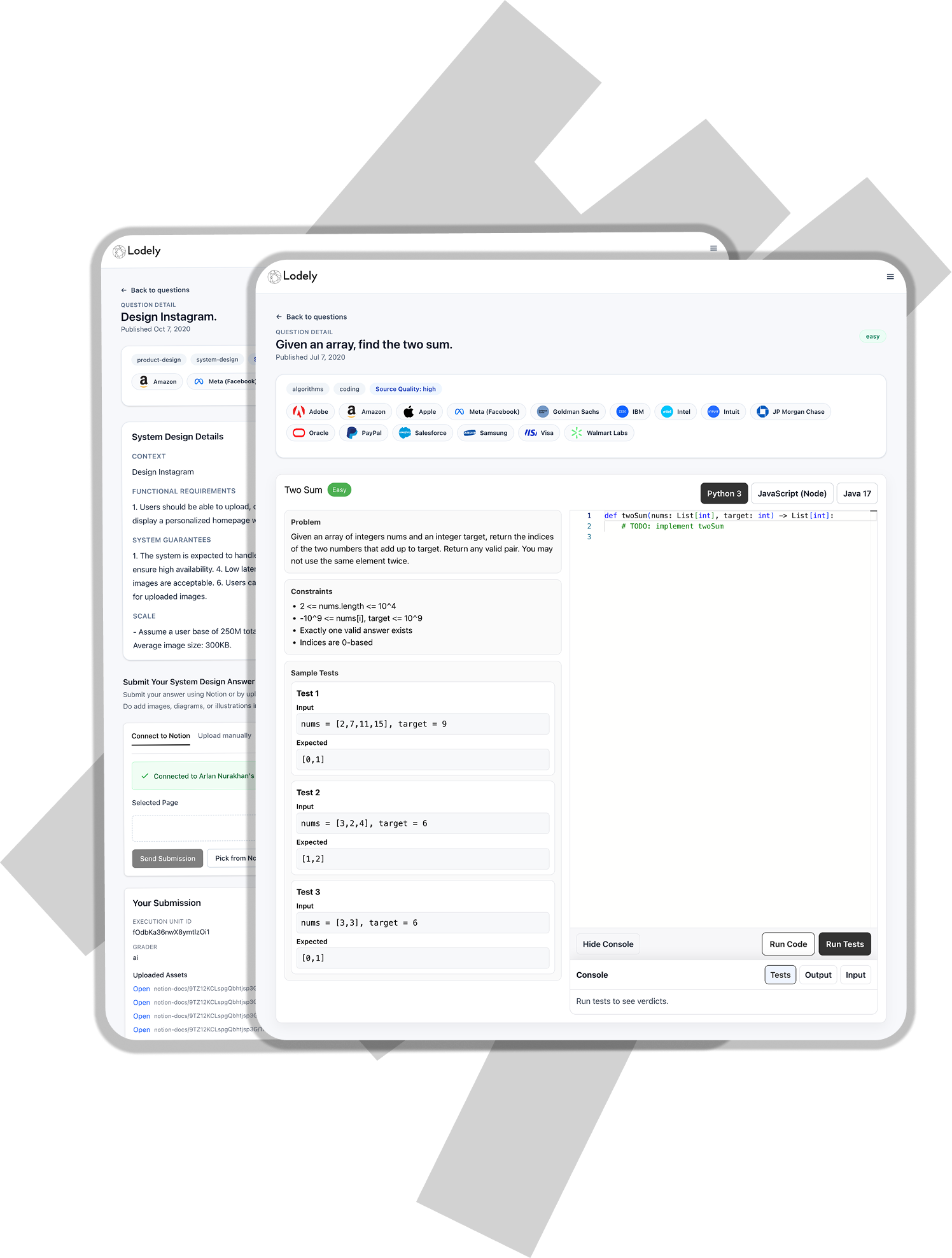
How Lodely Helps You Prepare for Your Online Assessment at Anthropic
If Anthropic’s OA feels stressful because it’s fast, system-heavy, and nothing like a typical LeetCode session, Lodely gives you a prep path that actually matches the reality of the assessment.
- Explore company-specific OA formats through the Company Online Assessments hub
- Strengthen your system-building skills with the System Design Resource
- Get personalized, high-level guidance through the Software Engineering Career Coach
With Lodely, your prep stays grounded in the same system-focused style Anthropic expects from candidates.
Conclusion
We hope this guide gives you the clarity you need to take on Anthropic’s OA with more confidence and direction. And if you’re exploring different tools or platforms to sharpen your skills before the assessment, you might find our Replit review helpful.
If you ever want deeper walkthroughs, interview breakdowns, or more system-style preparation insights, feel free to explore our blog. We share practical guides, strategies, and technical lessons there that can help you stay sharp long after this article.
Good luck, and we’re here to support you in any way we can as you continue your journey.
FAQs
What happens after you complete Anthropic’s OA?
If your performance meets their bar, a recruiter usually reaches out to schedule the next interview stage. If not, you’ll typically receive a notice within one to two weeks with your status.
What score do you need to pass Anthropic’s Online Assessment?
There’s no fixed passing score. Progress usually depends on how many levels you clear and how stable your solution is across test cases.
How long does it take to hear back after completing the OA?
Most candidates hear back within one to two weeks. The timeline can shift depending on role demand and hiring volume.
Can you retake Anthropic’s OA if you don’t pass?
Retakes aren’t guaranteed. Some candidates are offered another attempt after a waiting period, but it varies by role and recruiter.
Is the OA different for SWE, ML, or Research roles?
The structure is similar for all roles, but ML and research candidates may see problems with data-focused behavior. The core format of evolving system-style levels stays the same.
✉️ Get free faang interview cheat sheet and interview tips weekly
✉️ Get free faang interview cheat sheet and interview tips weekly