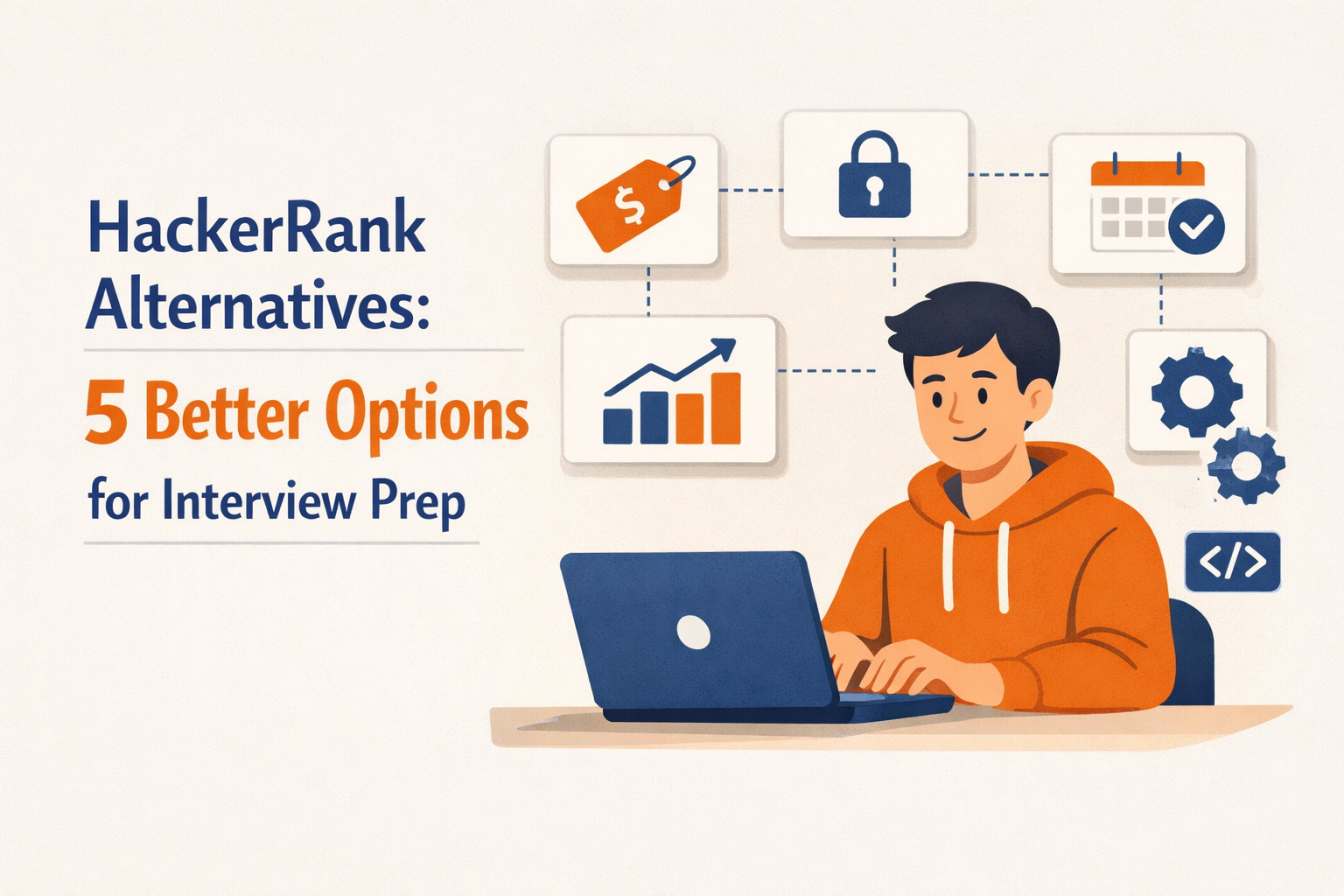
HackerRank Alternatives: 5 Better Options for Interview Prep

You signed up for HackerRank thinking it would get you interview-ready. Three weeks later, you've earned a few badges, solved some challenges ranked "Easy" that definitely weren't easy, and you still have no idea if you're actually prepared for a real technical interview.
Sound familiar? You're not alone. HackerRank is fine for what it is, but for serious interview prep, most engineers hit a ceiling fast. The good news: there are better tools out there, and some of them were built specifically for the problem HackerRank doesn't solve — knowing what to do next.
Here are 5 alternatives worth your time, what each one actually does well, and how to pick the right one for where you are right now.
What Is HackerRank?
HackerRank is a coding practice platform that doubles as a hiring tool for companies. Employers use it to send timed coding assessments to candidates, and engineers use it to practice algorithmic challenges across a range of difficulty levels.
It's solid for getting reps in and is free for developers. The problem? It was built primarily for companies to screen candidates, not for candidates to prepare strategically. That means you get a massive bank of problems with no real guidance on which ones matter, what patterns to prioritize, or when you're actually ready to walk into an interview.
Think of it like being handed an entire medical textbook and told "study." Technically everything you need is in there. Practically, you'll waste months on the wrong chapters.
What to Look for in a HackerRank Alternative
Before you jump to another platform and repeat the same cycle, here's what actually matters for interview prep:
- Structured guidance — Does the platform tell you what to work on next, or does it just hand you a pile of problems and wish you luck?
- Real interview coverage — Are you practicing questions that actually show up at top companies, or generic algorithmic problems from 2014?
- End-to-end prep — Coding is only one piece. System design, behavioral rounds, and company-specific prep matter just as much at the offer stage.
- Progress signal — Can you tell when you're ready, or are you just grinding until you "feel" prepared (spoiler: you never will)?
- Active practice over passive consumption — Watching someone solve a problem is not the same as solving it under pressure yourself.
Keep these in mind as you evaluate the options below. The best platform for you depends on where your gaps actually are.
LeetCode
LeetCode is the most prominent platform for interview prep, and for good reason. It has the largest problem database in the space, an active community, and company-tagged questions that let you see what Google, Meta, or Amazon has asked recently.
What it does well:
- Massive problem library (3,000+ questions) with company tags and frequency data
- Active discussion forums where engineers break down optimal solutions
- Weekly contests that simulate time pressure
- Premium tier unlocks company-specific question lists and frequency sorting
Where it falls short:
You can spend months grinding problems and still walk into an interview unprepared because you studied the wrong patterns. There's no guided path, no system design coverage, and no help with behavioral rounds. For disciplined engineers who already know their weak spots, it's powerful. For everyone else, it's a recipe for burnout and directionless effort.
Best for: Engineers who want a deep problem bank and already have a clear study plan. Pairs well with a more structured tool.
Lodely
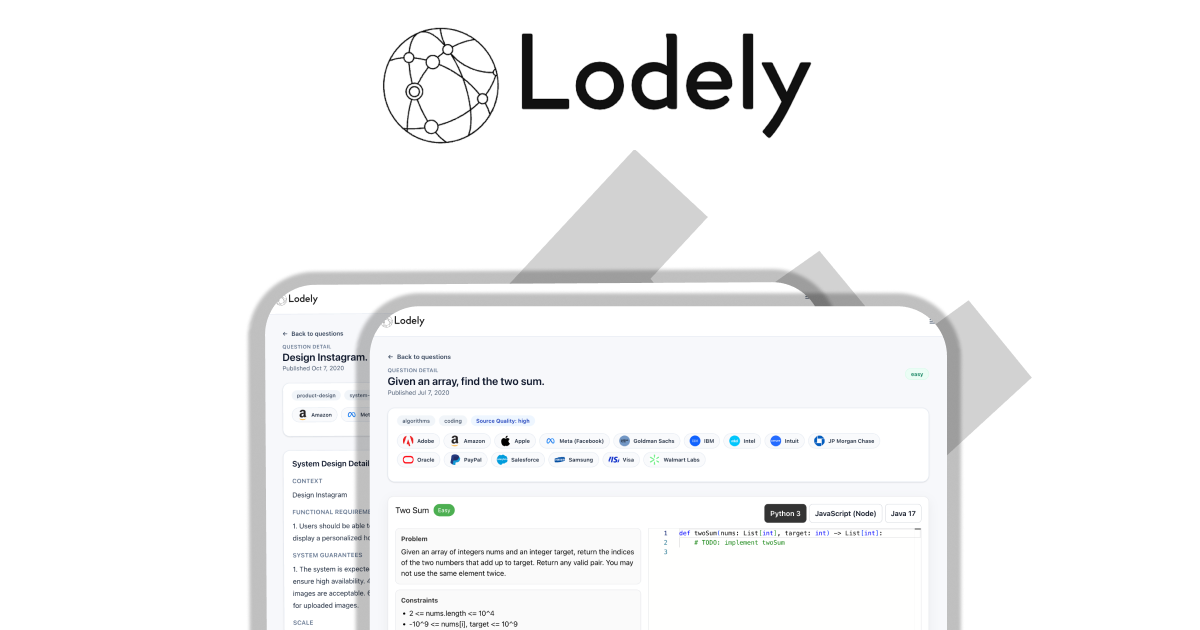
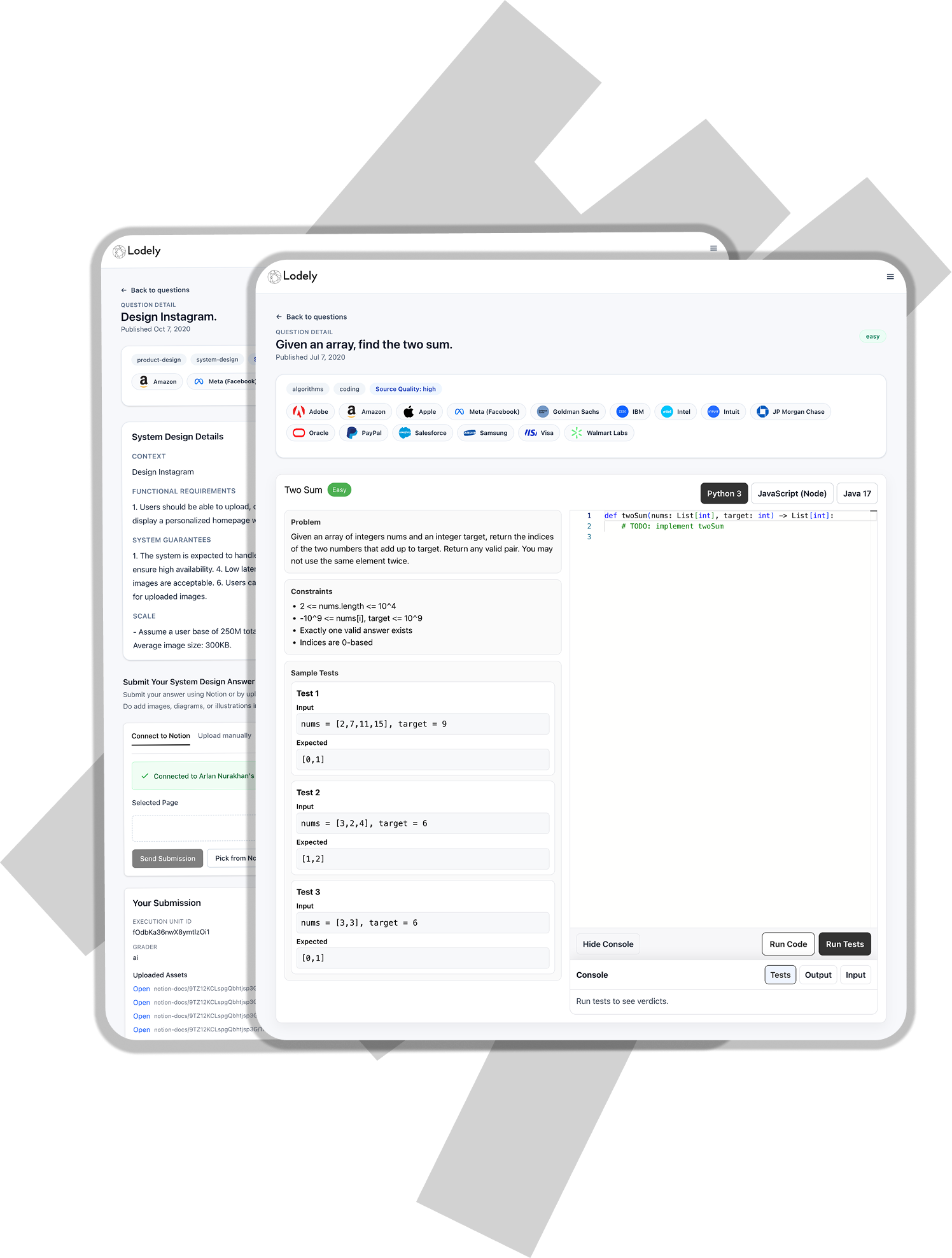
Lodely takes the opposite approach to most prep platforms. Instead of dumping 4,000+ questions in your lap and saying "go," it builds you a guided path based on where you actually are and what you actually need to work on next.
What it does well:
- Guided learning path that adapts and tells you exactly what to focus on — no guessing, no wasted effort
- 4,000+ real interview questions sourced from what actually shows up at top companies, not invented filler problems
- End-to-end coverage — coding, system design, behavioral, and company-specific prep all in one place
- 100+ interview simulations that mirror real interview conditions
Where it stands out:
The core insight behind Lodely is that most engineers struggle with knowing exactly what to do at each step that actually moves the needle towards an offer. They fail because they don't know what to prioritize, they prep the wrong things, and they struggle to effectively fill their interview pipeline. Lodely's guided system solves that. You work through a structured path, and move through with confidence. It's the difference between wandering a library and having a senior engineer sit next to you and say "do this next."
Best for: Engineers who are done grinding randomly and want a clear, structured path from where they are now to an offer at a top company.
interviewing.io
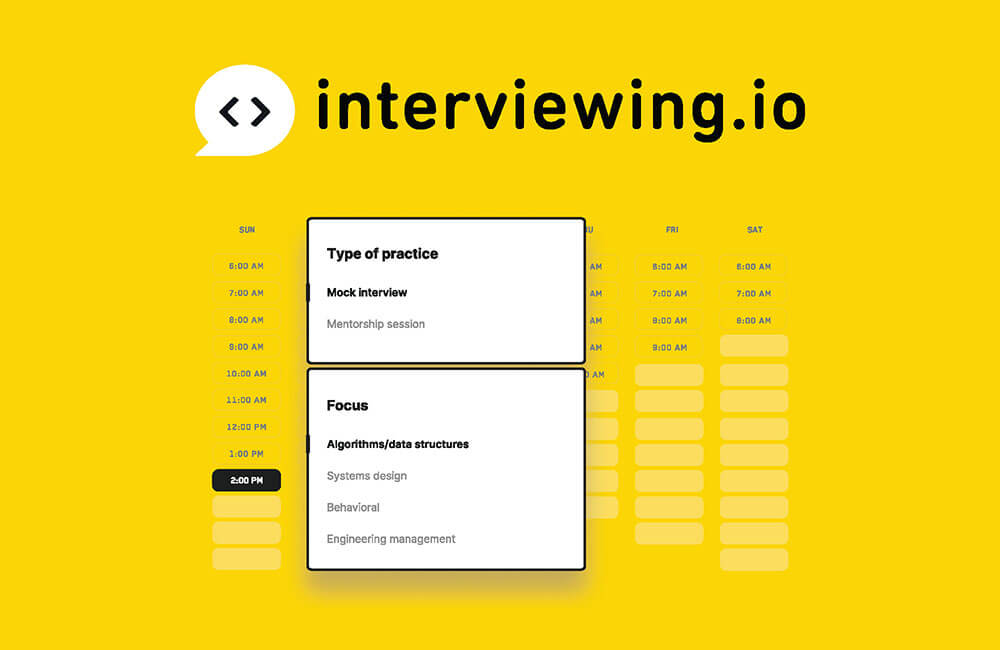
interviewing.io is a mock interview platform where you practice with real engineers from top companies, completely anonymously. You don't see them, they don't see you, and the focus stays on your technical performance.
What it does well:
- Anonymous mock interviews with engineers from Google, Meta, Amazon, and other top companies
- Real-time feedback on your problem-solving approach, communication, and code quality
- Performance data that shows you how you stack up against other candidates
- Direct hiring pipeline — strong mock interview performances can lead to actual job referrals
Where it falls short:
It's a practice ring, not a training program. You won't get a curriculum, a study plan, or help with the 90% of prep that happens before you're ready to mock interview. Pricing can also add up quickly if you're doing multiple sessions per week.
Best for: Engineers who are already solid on fundamentals and want realistic practice with feedback from people who've been on the other side of the interview table.
Exponent
Exponent started as a product management interview prep platform and expanded into software engineering. It offers video courses, mock interviews, and a peer practice community.
What it does well:
- Clean video explanations of system design concepts and coding patterns
- Peer mock interview matching so you can practice with other candidates
- Covers both PM and SWE interviews, useful if you're exploring multiple roles
- Community-driven — you can find study partners and accountability groups
Where it falls short:
Exponent's SWE content isn't as deep as platforms built specifically for engineers. The video-first format leans toward passive consumption, and the peer mock interviews vary wildly in quality depending on who you're matched with. It's broader but shallower.
Best for: Engineers who also want to explore PM roles, or those who thrive with a study-buddy community approach.
AlgoExpert
AlgoExpert offers a curated set of 160+ hand-picked coding questions with detailed video walkthroughs. It's the "quality over quantity" play in the interview prep space.
What it does well:
- Curated question list that cuts through the noise — no scrolling through thousands of problems wondering which ones matter
- High-quality video explanations that walk through the thinking process, not just the solution
- SystemsExpert add-on for system design prep
- Clean, distraction-free interface
Where it falls short:
160 questions is a focused list, but it can feel limiting if you're targeting specific companies with unique question styles. The format is still mostly passive — you watch, then you try. There's no adaptive guidance, no behavioral prep, and no company-specific preparation beyond general patterns.
Best for: Engineers who want a tight, curated problem set with excellent explanations and don't need end-to-end interview coverage.
The Real Problem with Sites Like HackerRank
Here's what nobody tells you: the platform isn't your bottleneck. Your strategy is.
You can grind 500 LeetCode problems and still bomb an on-site because you never practiced system design. You can ace every mock interview on interviewing.io and still fumble the behavioral round because you didn't prepare your story. You can watch every AlgoExpert video twice and still freeze when a real interviewer throws a question you haven't seen.
The real problem with HackerRank — and most prep platforms — is that they optimize for content volume, not candidate outcomes. They give you a gym membership and assume you'll figure out the workout plan yourself.
The engineers who land offers at top companies aren't the ones who solved the most problems. They're the ones who studied the right things, in the right order, and knew when they were ready to stop prepping and start interviewing.
That's a strategy problem, not a platform problem.
Which Alternative Is Right for You?
Skip the analysis paralysis. Here's the honest breakdown:
- You want a massive problem bank and you'll build your own study plan — go with LeetCode.
- You want a guided, end-to-end system that tells you exactly what to do next — go with Lodely.
- You're interview-ready and want realistic mock practice with real engineers — go with interviewing.io.
- You're exploring both PM and SWE roles and want a community — go with Exponent.
- You want a tight, curated set of problems with great video explanations — go with AlgoExpert.
And if you're being honest with yourself, you probably don't need more content. You need more clarity. Figure out where your actual gaps are, pick the tool that closes them, and start executing. The offer isn't going to come from another subscription — it's going to come from focused, strategic preparation that compounds every single day.
Stop browsing platforms. Start preparing with a plan.
✉️ Get free faang interview cheat sheet and interview tips weekly
✉️ Get free faang interview cheat sheet and interview tips weekly