


Asana Interview Questions: 9 Questions to Prepare for in 2026

Asana's engineering interview guide explains its evaluation criteria and preparation approach. You need to demonstrate technical competence, explain your reasoning clearly, and collaborate with the interviewer.
What to Expect: Asana Interview Process
The format varies by role and level. Most loops cover four areas: context, coding, technical or design depth, and collaboration or values. Before solving a technical problem, confirm what you need to build. Identify the constraint that drives your approach and the test you'll run before moving on. For experienced roles, be ready to discuss system boundaries, tradeoffs, and decisions from past projects.
How to Prepare and Pass Asana Interviews
Allow four to six weeks if your coding skills and behavioral stories are current. If you're rebuilding from scratch, allow eight to twelve weeks. For each problem, restate the prompt, identify the main constraint, choose an approach, and test an extreme case.
Prepare collaboration stories. Use examples that show how you listened, resolved a disagreement, or changed course after receiving new evidence.
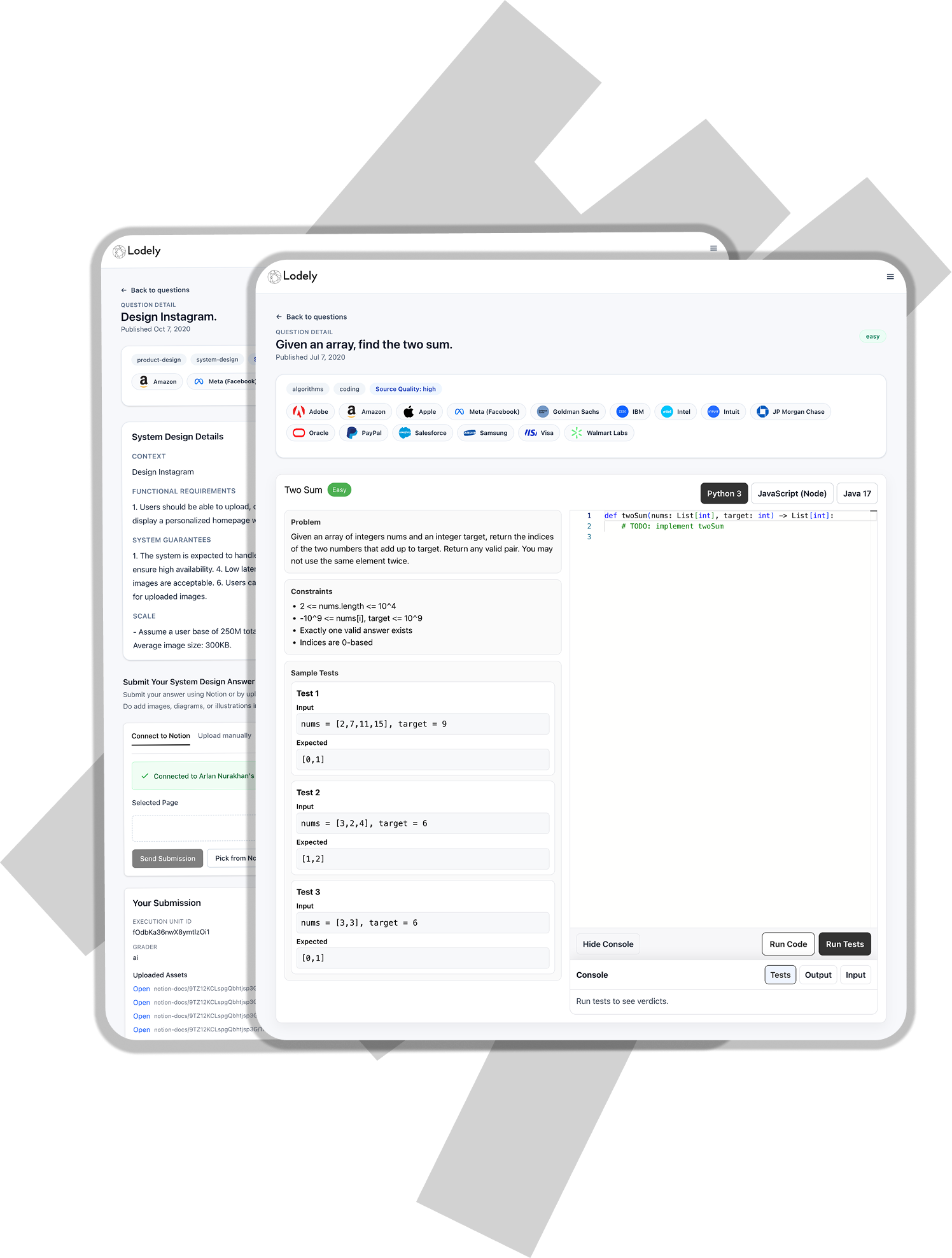
Use Lodely to practice implementation, ambiguous prompts, and behavioral questions together. After each session, note any missed assumption or explanation that took too long. Use that note to choose your next practice task.
Repeat the exercise until your assumptions and tests are clear without extra prompting.

Asana Interview Breakdown
Jigsaw Puzzle
Type: Coding and system-design reasoning. The Trick: Convert the prompt into explicit states and assumptions before choosing an approach. What It Tests: Problem interpretation, communication, and handling ambiguity.
Address Log Analysis
Type: Coding analysis. The Trick: Specify the record format and grouping rule before parsing the log. What It Tests: Parsing, data organization, and edge-case handling.
ASCII Printer
Type: Coding and system-design reasoning. The Trick: Define the output format and coordinate system before implementing transformations. What It Tests: Implementation discipline, readability, and testing.
The remaining six questions are Cats and Rabbits Game, Code Snippet Analysis (Runtime and Memory), 2048 Game, Mistake, Conflict, and Task Prioritization. For technical questions, state the inputs and output, explain your data structure, and analyze runtime and memory use. For behavioral questions, describe your role, decision, and result. In every answer, explain your reasoning clearly.
What Comes After The Interview
Compensation is part of the conversation. A May 2026 snapshot placed total US software engineer compensation between $164,000 at L3 and $415,000 at L6. Ask which level the team is considering, how equity vests, and which offer components are negotiable.
Candidate Experiences
One recent senior software engineering candidate described an initial technical interview that combined object-oriented design with a coding problem. The next stage was a four-interview panel covering a two-hour coding session, system design, object-oriented design, and behavioral questions. The candidate said scheduling was efficient and reported a positive experience, though they did not receive an offer. Prepare to move between implementation, design, and collaboration topics in the same loop.
Conclusion
Asana evaluates clear technical reasoning and collaboration. Use Lodely to practice Asana questions and sharpen how you explain code, tradeoffs, and behavioral examples.
✉️ Get free faang interview cheat sheet and interview tips weekly
✉️ Get free faang interview cheat sheet and interview tips weekly
