


Lyft Interview Questions: 7 Questions to Prepare for in 2026

Lyft's software-engineering interview process typically has four stages: a recruiter screen, a technical phone screen, an onsite loop, and team matching. Technical screens can take up to 60 minutes. The onsite process typically includes a computer science fundamentals round, a 90-minute laptop exercise, a system-design interview, and a hiring-manager interview.
What to Expect: Lyft Interview Process
The current Lyft interview process can include a one-hour coding round followed by four onsite interviews. The laptop interview is the distinctive part of the process. Candidates work in a local environment and may consult documentation. Interviewers emphasize correctness, clean code, and performance. The system-design portion covers requirements, APIs, data models, and practicality.
Lyft's April 2026 candidate privacy policy says automated tools may be used to record, transcribe, or summarize interviews. These tools may also compare your information with published selection criteria. Speak to your recruiter about what applies to your job and what tools are available.
How to Prepare and Pass Lyft Interviews
If you're already comfortable coding in your local IDE and building a complete program, plan four to six weeks. If you need to practice building working programs under time pressure, plan eight weeks.
- Rehearse your laptop workflow: handle input, run tests, and add features in small, working steps.
- Connect ride designs to domain constraints. Review location, demand spikes, idempotent requests, pricing, driver status, and regional failure.
- Prepare for manager questions about mentoring, stakeholder communication, low-level design, and project ownership.
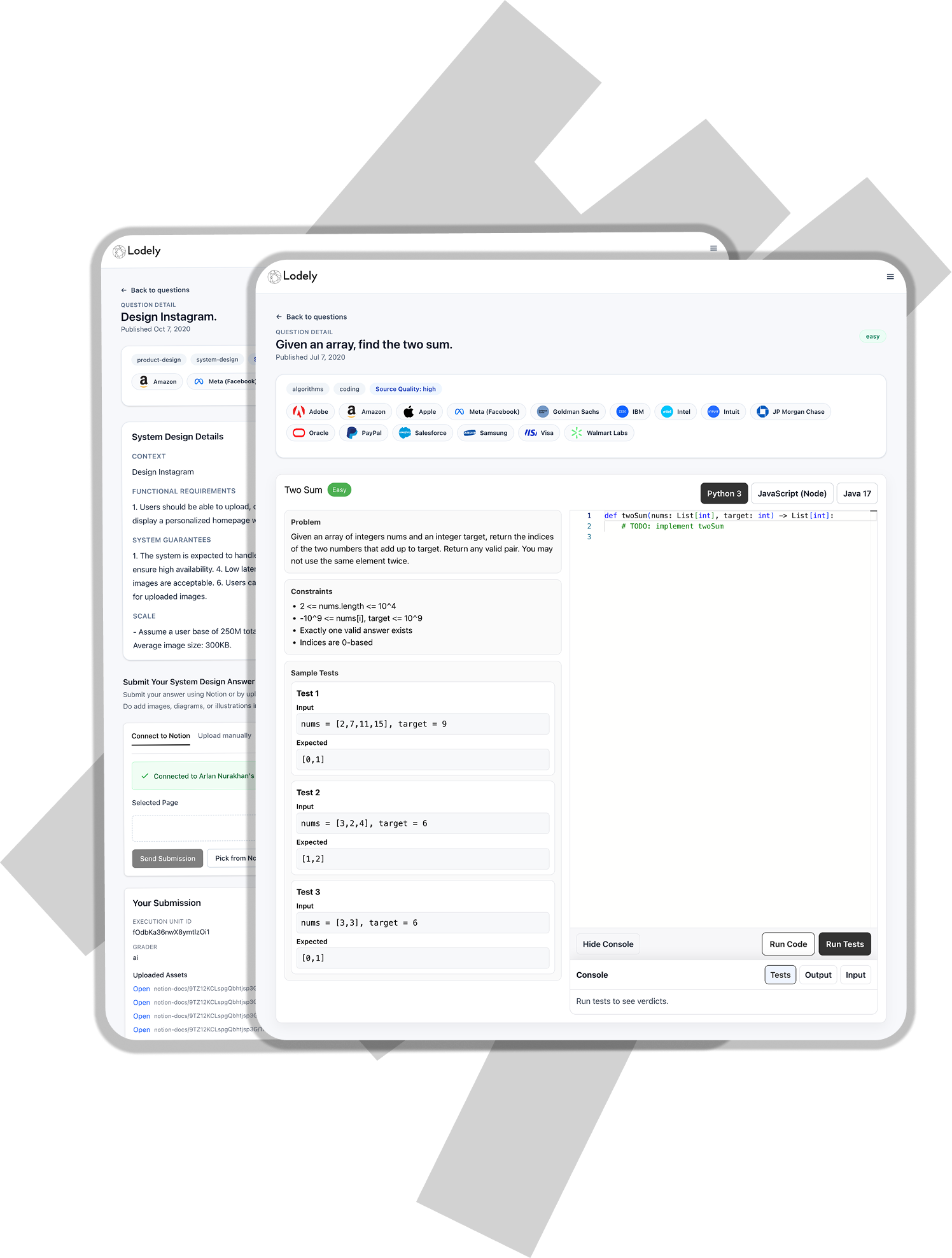
Use Lodely to focus on Lyft's coding, data, and case-study formats.

Lyft Interview Breakdown
List Sorting
Type: Linked-list coding. The Trick: Reorder the nodes without copying their values into another list. What It Tests: Pointer safety, complexity, edge cases.
Page Fetcher
Type: Stateful API wrapper. The Trick: Requests cross page boundaries, so the next request must return the correct items. What It Tests: Pagination state, boundary math, and object design.
Ride Ratings
Type: API and data-modeling exercise built around ride and rating models. The Trick: Keep identifiers, relationships, and validation rules consistent across two connected APIs. What It Tests: Object modeling, API contracts, and careful handling of invalid or incomplete rating state.
The page includes four more questions. Probability Questions covers rider behavior and conditional probability. Tree List Conversion covers converting a sorted list into a balanced search tree. SQL Questions uses location records to calculate ride duration and driver pay. The Case Study covers wait-time growth, dynamic pricing, coupons, and cancellations.
What Comes After The Interview
After passing the loop, candidates speak with the teams they might join. Reported median salary is about $188,000 at T3, $236,000 at T4, and $345,000 at T5. Stock makes up a large share of total compensation.
Candidate Experiences
One recent U.S. backend candidate described four rounds: fundamentals, laptop coding, system design, and a manager interview. They completed the fundamentals round in 30 minutes out of a 60-minute limit. A requested change pushed the laptop coding round five minutes past its scheduled end. The system-design round covered requirements, APIs, a database model, and end-to-end flow. This account shows why you should reserve time for change requests and regression checks.
Conclusion
Lyft values complete code, product thinking, and communication. Practice the selected Lyft questions on Lodely and review the detailed editorials before running a timed loop.
✉️ Get free faang interview cheat sheet and interview tips weekly
✉️ Get free faang interview cheat sheet and interview tips weekly

