


Abnormal AI Interview Questions: 8 Questions to Prepare for in 2026

Abnormal AI's 2026 hiring process includes a talent acquisition screen, a hiring manager interview, a role-specific skills assessment, and cross-functional team interviews. Engineering candidates should expect questions about security, data, production systems, collaboration, ownership, and responsible AI use.
What to Expect: Abnormal AI Interview Process
Based on the company's June 2026 hiring guide, the hiring process comprises five stages: application, talent-acquisition screen, hiring-manager interview, skills assessment, and team interview. The skills assessment varies by role and aims to reflect real work, while team interviews focus on values and cross-functional collaboration.
Abnormal's 2026 guidance also says interviewers assess how candidates reason, use AI to improve output, and take responsibility for the results. Prepare to explain when AI helped, what you verified independently, how you protected confidential information, and when you rejected a generated answer.
How to Prepare and Pass Abnormal AI Interviews
Plan four to six weeks if your backend and distributed-systems fundamentals are current. Allow eight to ten weeks if you are rebuilding your security-architecture knowledge. Use a weekly schedule that covers threat modeling, reliable event processing, access control, design trade-offs, and ownership stories. For each technical task, explain the attacker, trust boundary, failure mode, and operational signal before proposing a component.
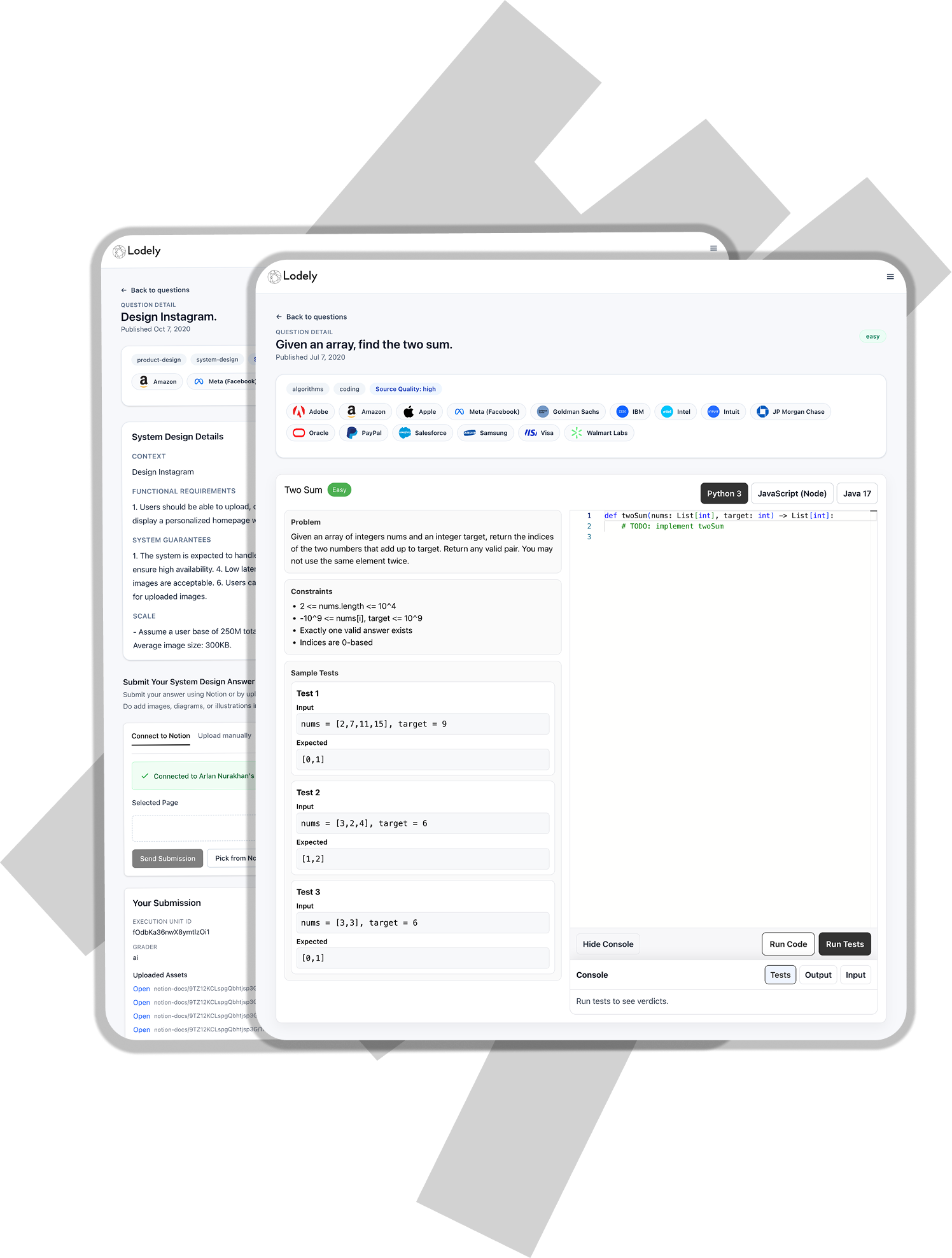
These eight examples cover security work tied to real product constraints. Email Quarantine System, Email Data Loss Prevention, Supply Chain Security, and Malicious Link Detection test enforcement and detection design. Code Review tests engineering judgment. Incident Response Workflow, Email Campaign Tracking, and Threat Actor Attribution cover events, identity, evidence, and time. Use Lodely to practice the technical, system-design, and behavioral parts of the loop together.

Abnormal AI Interview Breakdown
Email Quarantine System
Type: Backend workflow and policy design.
The Trick: Model review, release, audit, and failure states instead of representing quarantine with one flag.
What It Tests: Data modeling, authorization, idempotency, and operations.
Email Data Loss Prevention
Type: Security system design.
The Trick: Define how policy rules account for context, false positives, and safe exceptions.
What It Tests: Policy evaluation, sensitive-data handling, scale, and trade-offs between protection and usability.
Supply Chain Security
Type: Threat modeling and distributed design.
The Trick: Explain how identity, provenance, dependencies, and enforcement connect across the system.
What It Tests: Security boundaries, dependency risk, evidence gathering, and layered defense.
What Comes After The Interview
Before making an offer, the team reviews technical and cross-functional feedback. Self-reported U.S. compensation data from September 2026 lists total annual pay of $179,000 at P1, $203,000 at P2, $232,000 at P3, and $303,000 at P4. Stock usually vests over four years, so compare annualized stock, base salary, and bonus separately.
Candidate Experiences
One recent software engineering candidate described a fast recruiter screen, an online assessment, and a one-hour technical interview. The candidate found the recruiter screen structured but said the technical interview was one-sided and offered little explanation. The process ended without an offer. State your assumptions and reasoning clearly even when the interviewer gives little feedback.
Conclusion
Abnormal AI rewards practical security engineering, clear ownership, and disciplined use of AI in real work. Use Lodely to rehearse all eight examples in coding, design, and communication, then pressure-test every answer for security assumptions and operational failure modes.
✉️ Get free faang interview cheat sheet and interview tips weekly
✉️ Get free faang interview cheat sheet and interview tips weekly